
Jade: An agentic travel assistant
A LofiTrip concept. How I designed an AI that plans trips you can trust: it asks before it assumes, shows its sources, and previews every change before it touches your plan.
01 · WHY I BUILT THIS
A general AI can’t really plan a trip
Ask ChatGPT to plan a weekend and it’s magical for about ten seconds. Then it invents a hotel, gets the opening hours wrong, and silently rewrites your plan the moment you change one thing. Here’s the thing: any app can bolt on a chat model. The one thing it can’t copy is other people’s real trips, and that’s exactly what LofiTrip has. So I didn’t design a standalone AI app; I designed Jade as the planning layer inside LofiTrip, grounded in the community’s real trips. It’s a concept MVP, a clickable prototype built to show how an agentic experience should behave in travel: grounded, steerable, and honest about what it changes.
MY ROLE
I designed and built Jade end to end: the interaction model, the generative-UI patterns, and the trust and state-sync behavior. Then I shipped it as a working clickable prototype. The agentic behavior is real: trip state actually drives the itinerary, map and budget, so this isn’t a story told in static mockups.
The Jade concept: planning grounded in community trips
02 · THE DESIGN PROBLEM
Where AI trip planning breaks down
I started from where AI trip planning actually fails a traveler, not in theory but moment to moment.
STEP 1 · WHERE TRUST BREAKS
I mapped the moments a planner stops trusting the AI.
- It sounds confident, but you can’t tell where anything came from: invented hotels, wrong hours, no way to verify.
- You ask for one small tweak and it silently rewrites the whole plan, so you lose the parts you liked.
STEP 2 · WHAT A PLAN ACTUALLY IS
A trip isn’t a block of text. It’s dates, a budget, a route and a place to sleep, all linked. Change one and the rest has to move with it.
- Ask one thing in chat and the itinerary, the map and the budget all have to stay in sync.
- People plan in steps, not one giant prompt. They want to approve the direction before committing to details.
A trip is connected data
STEP 3 · THE REAL GAP
The deepest gap wasn’t answer quality. Map a normal chat AI onto a real trip and the same three gaps show up every time:
- It assumes instead of asking: you get a wall of plan from a vague prompt, with no way to set the direction first or adjust one piece.
- You can’t tell where anything came from: suggestions are pulled from the internet in general, not from people who just went, so there’s nothing to verify.
- Edits happen behind your back: change the hotel and the budget, route and nearby stops either drift silently or don’t move at all.
So the brief wasn’t “make the AI smarter.” It was: make the agent grounded, steerable, and honest about what it changes.
From chat AI to travel agent
A generic AI knows a place from the internet. Jade knows it from people who just came back.
03 · THE DESIGN BETS
Keeping the traveler in control
The obvious build is to let the agent just do it: one prompt, a finished trip. I think that’s the trap. Everyone’s racing to make agents more autonomous, but in travel that’s exactly what kills trust. You can’t tell where a plan came from, or what a quick edit quietly broke. So the three bets below all pull one way: make every move the agent makes legible, so a planner can always follow what it did and change it safely.
| FRICTION | WHAT A PLANNER NEEDS | DESIGN DECISION |
|---|---|---|
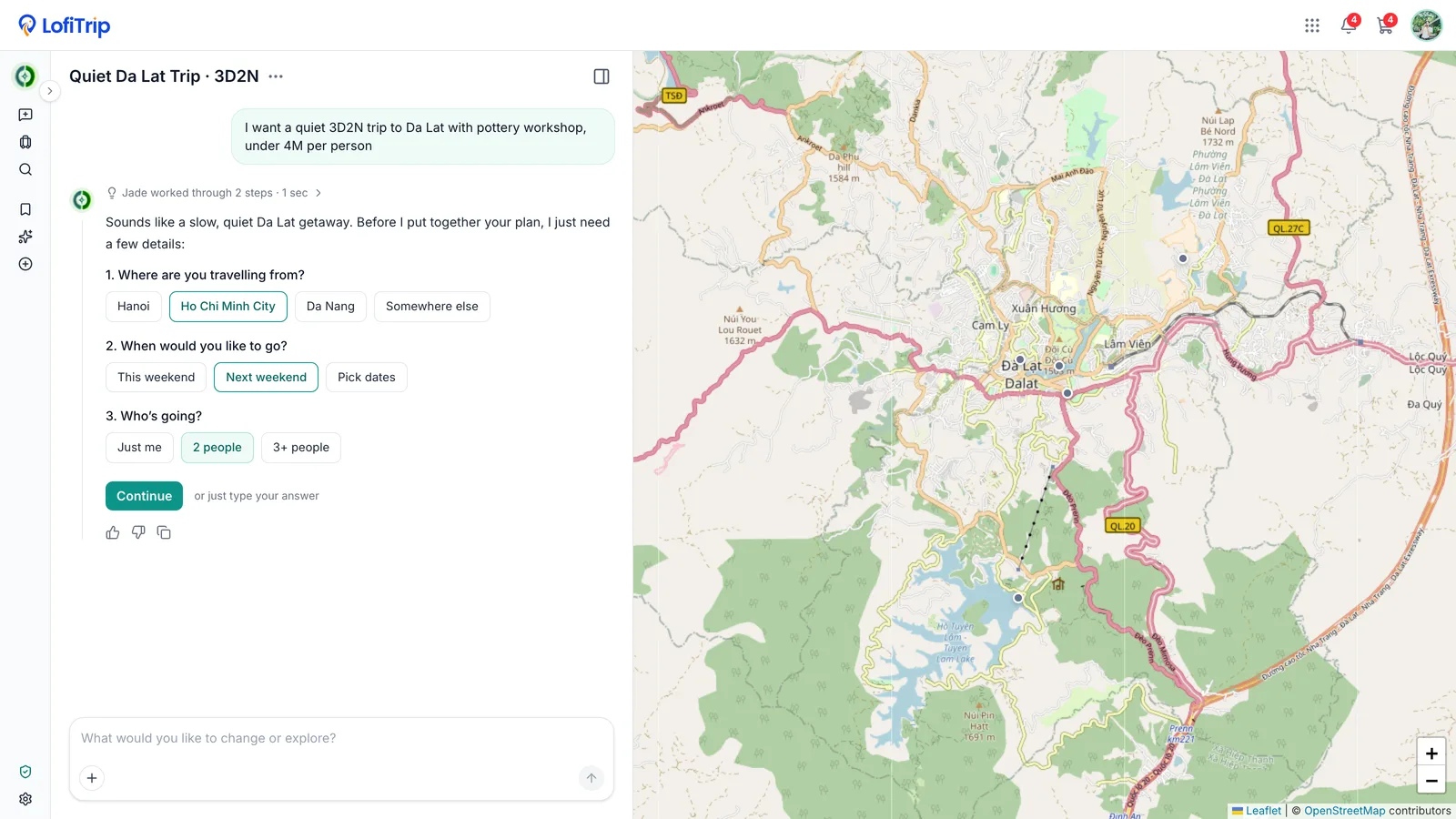
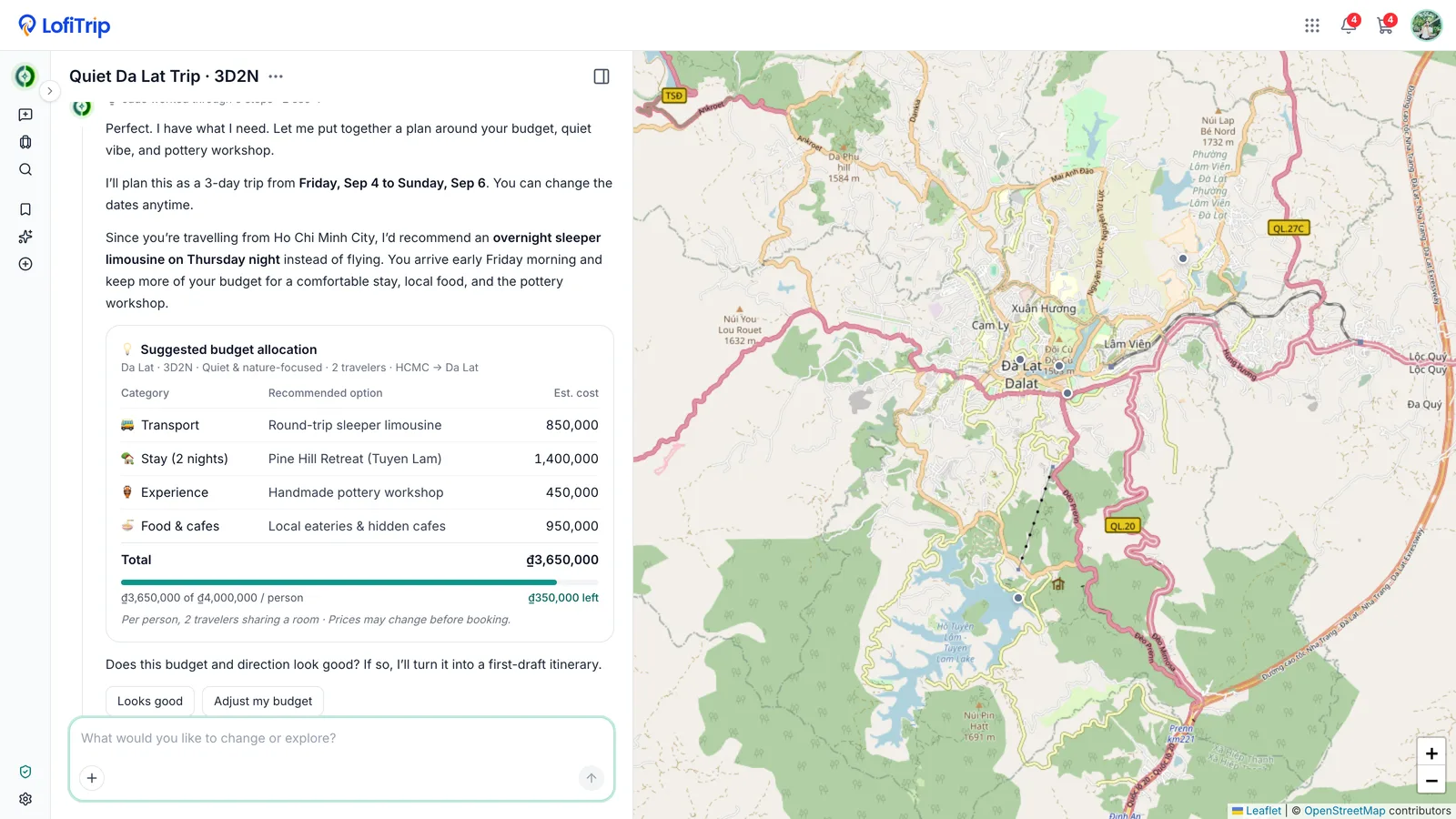
| It assumes instead of asking | Agree on direction before anything is built | Clarify with tappable chips, then a budget card to approve |
| You can’t tell where ideas came from | See where each idea came from | Ground every draft in real community trips, with source badges |
| Edits happen behind your back | Know exactly what changes before it happens | Preview the change, sync every surface, one-tap Undo |
THE CONSTRAINT I DESIGNED IN
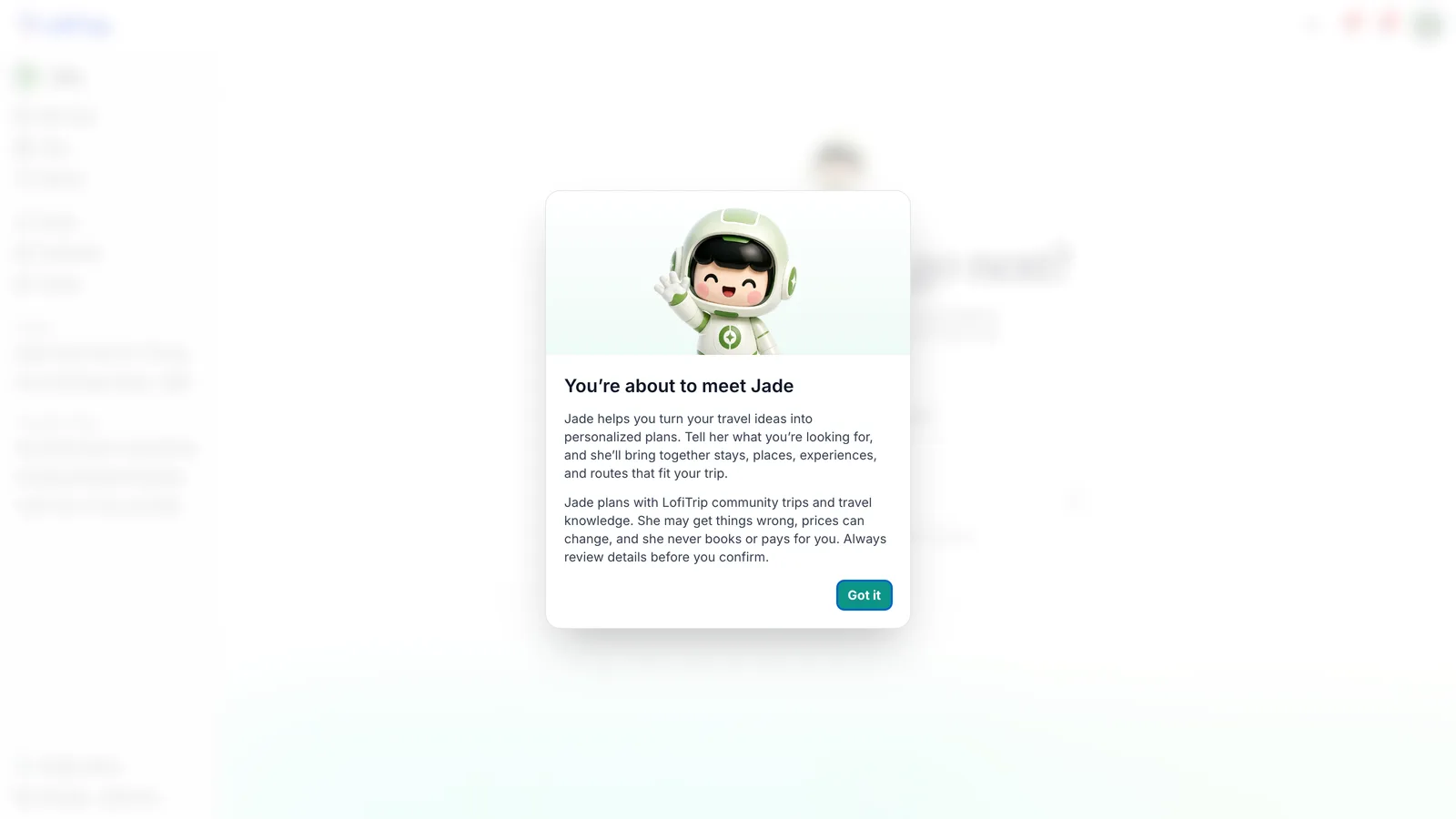
Jade never books or pays, and says so up front. It plans and hands off, and the human always stays in control of money and the final confirmation. Less “autonomous,” more trustworthy.
Bet 2 · show your sources
Bet 1 · approve direction first
04 · THE EXPERIENCE
The flow, screen by screen
Enough theory. Here’s what the concept actually does: a single flow (plan a quiet 3-day Da Lat trip, under ₫4M per person) that walks through every agentic pattern, end to end.
The core loop
PATTERN 1 · ASK BEFORE ASSUMING
Jade opens by setting expectations, then clarifies with tappable chips (where from, when, who) and shows a budget card you approve. Direction first, details after, so the plan starts from agreement, not a guess.
PATTERN 2 · SHOW YOUR SOURCES
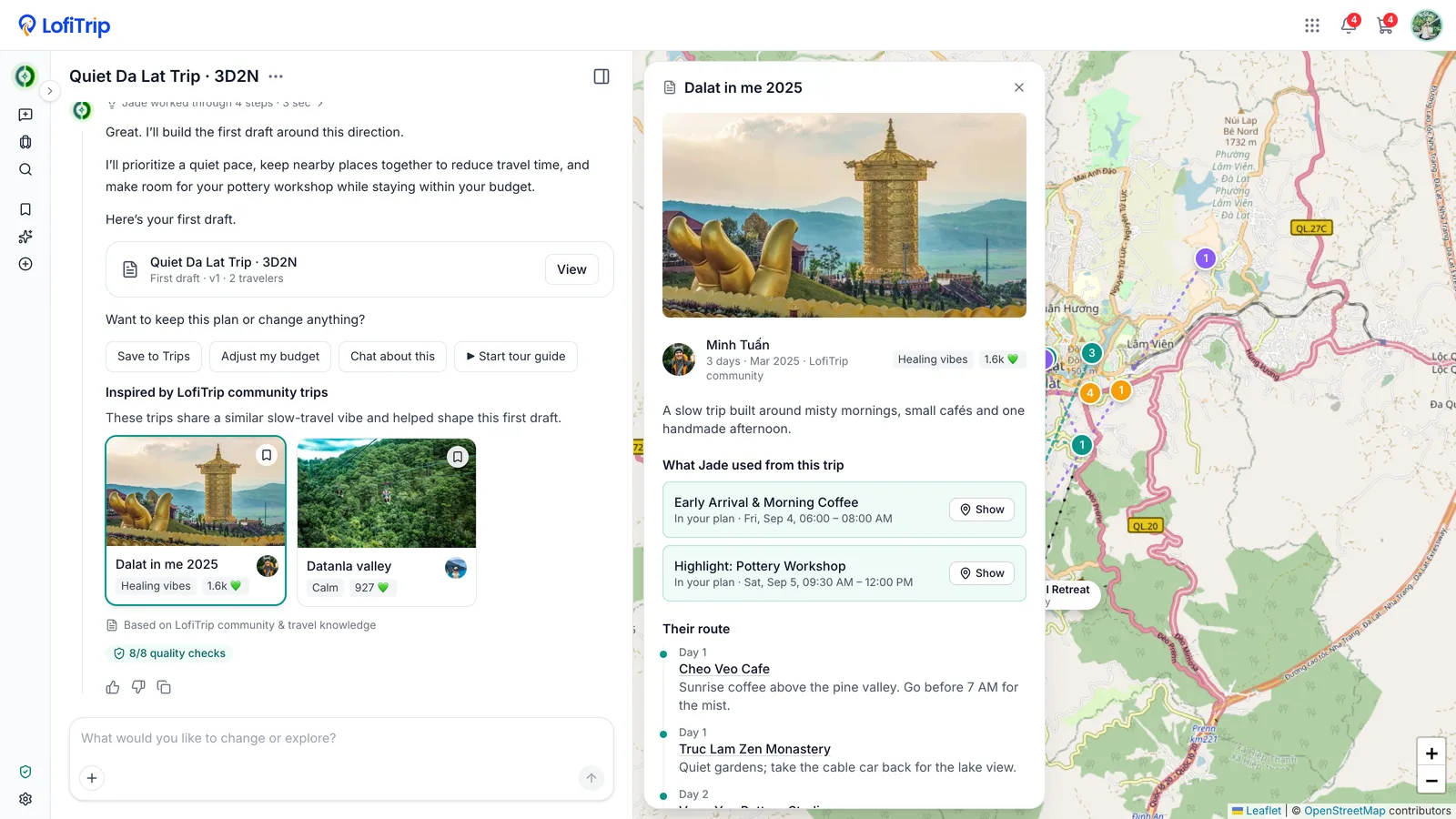
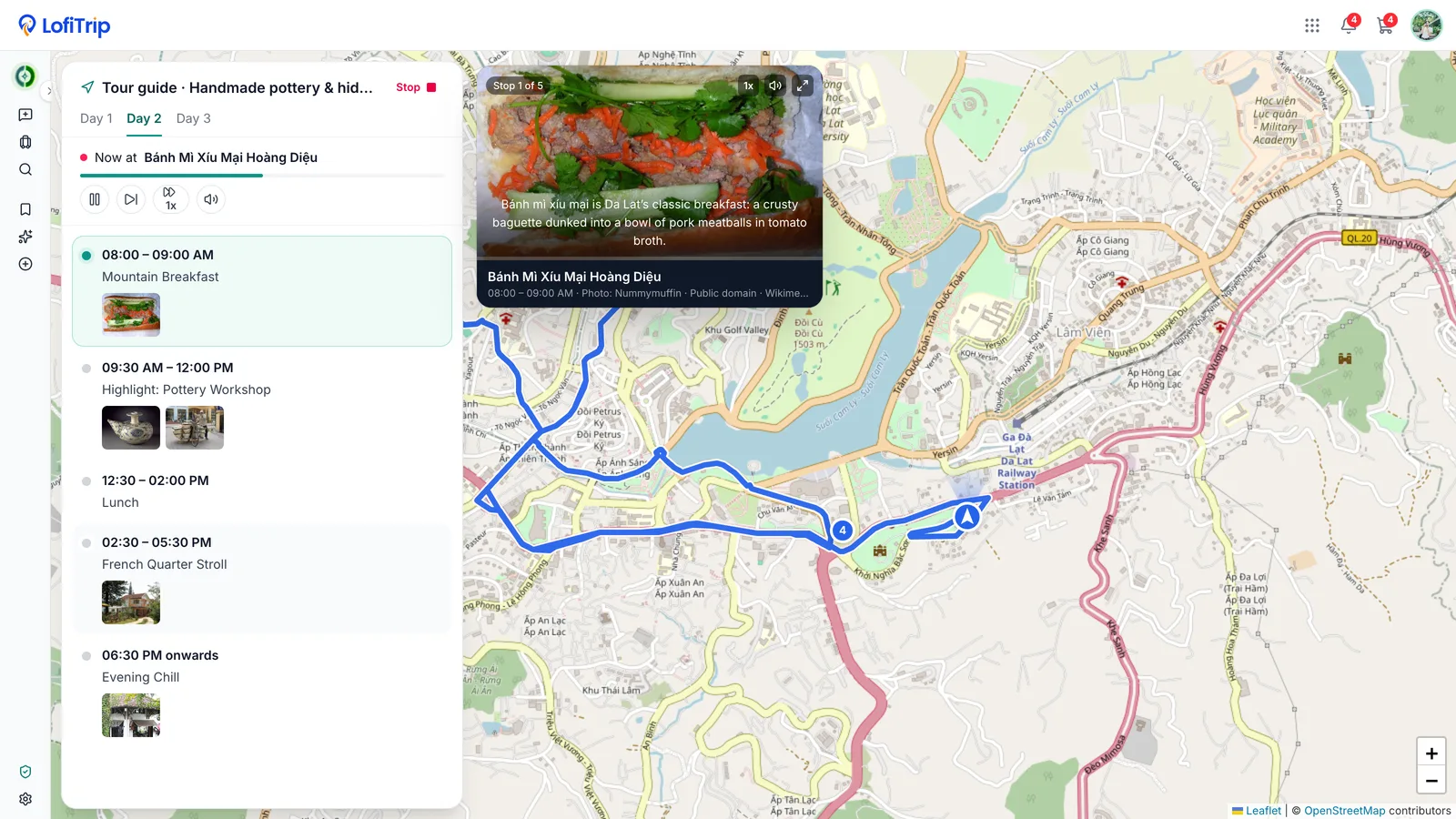
- Every first draft is matched to real LofiTrip community trips with a similar vibe, shown in the plan, not hidden behind the answer.
- Itinerary items carry source badges (e.g. “From: Dalat in me 2025”) a planner can trace.
- A working status shows Jade’s steps: matched trips, checked stays, grouped nearby stops, fit the budget.
Grounding, made visible
PATTERN 3 · NEVER CHANGE SILENTLY
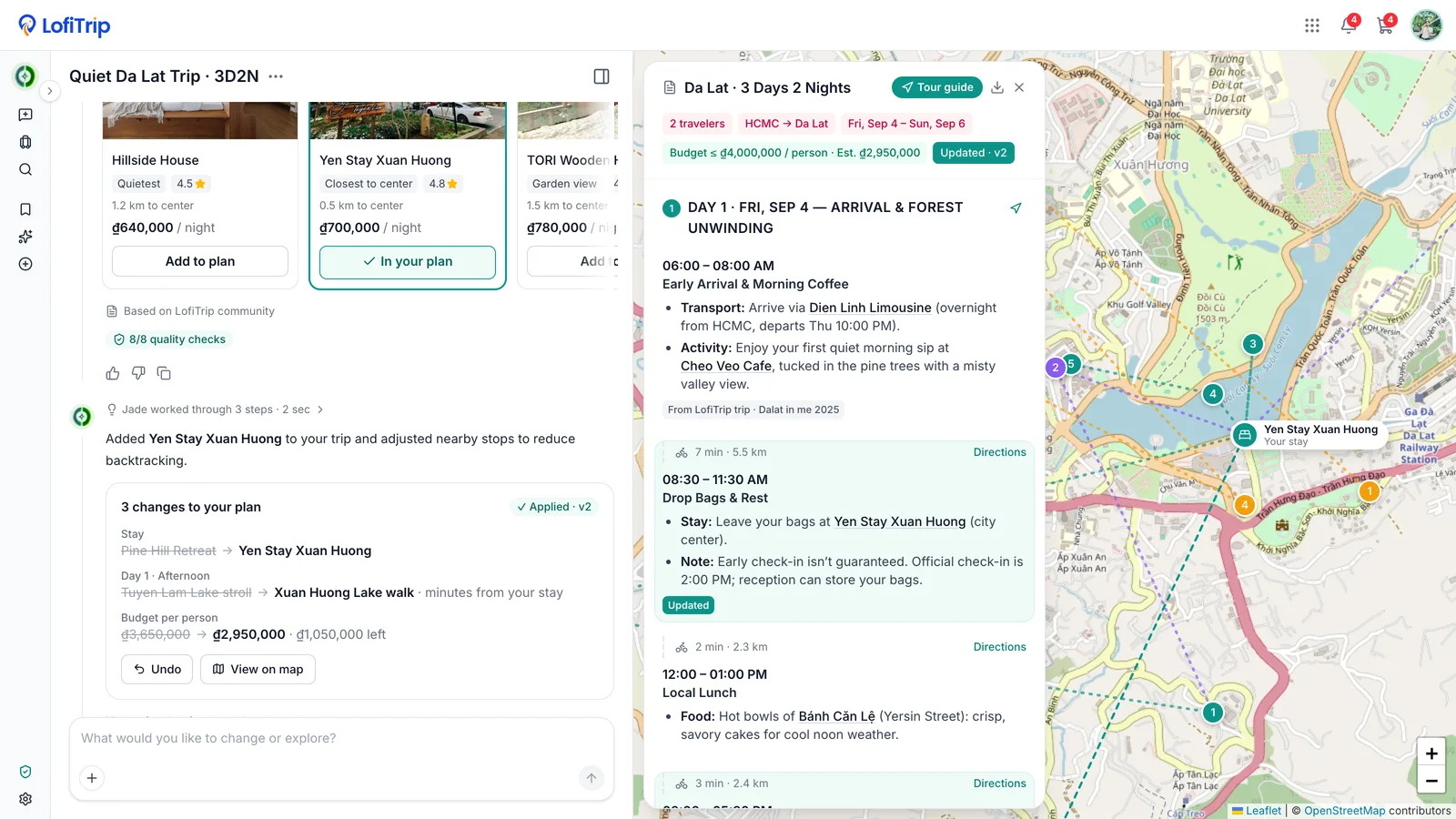
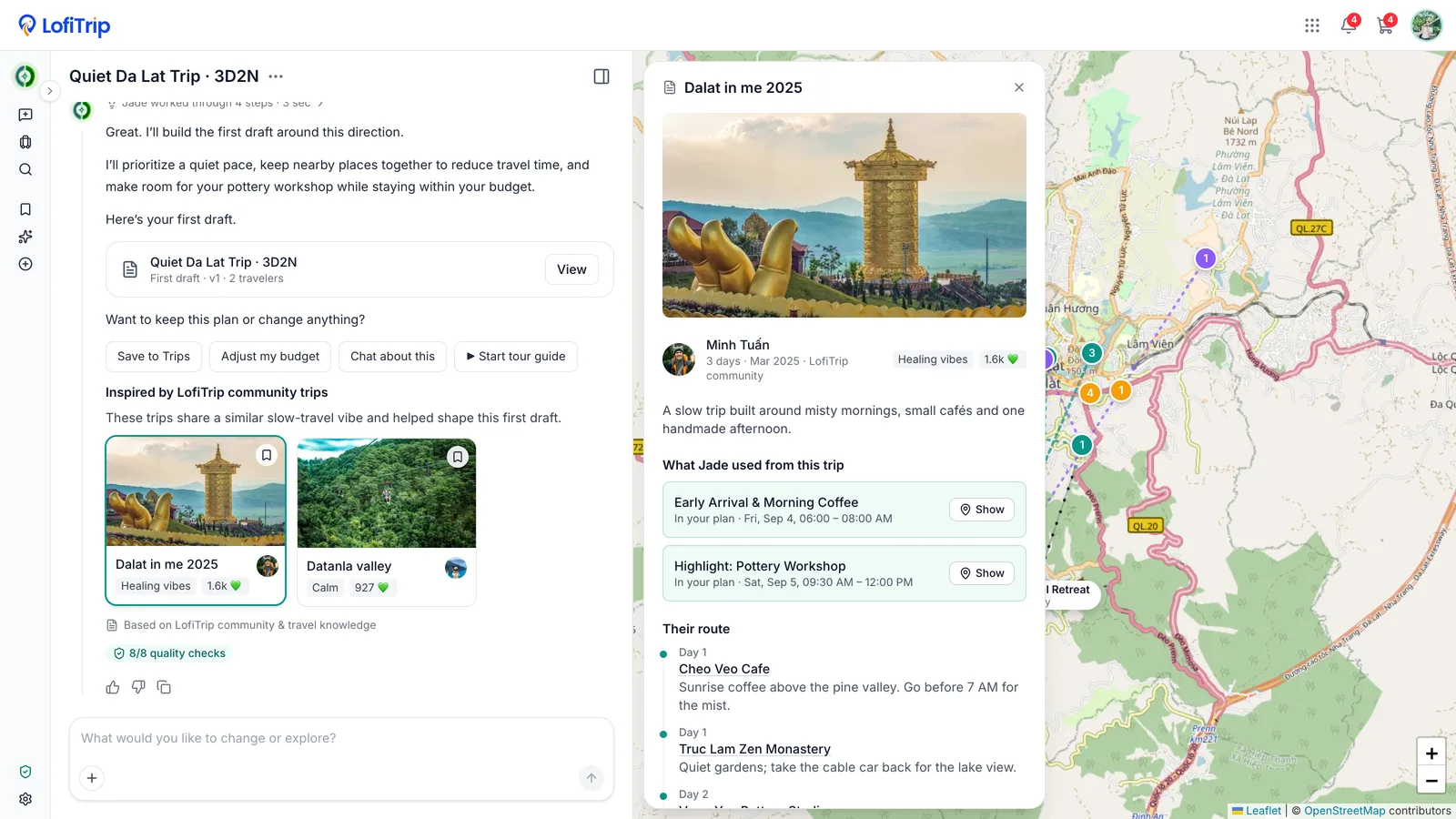
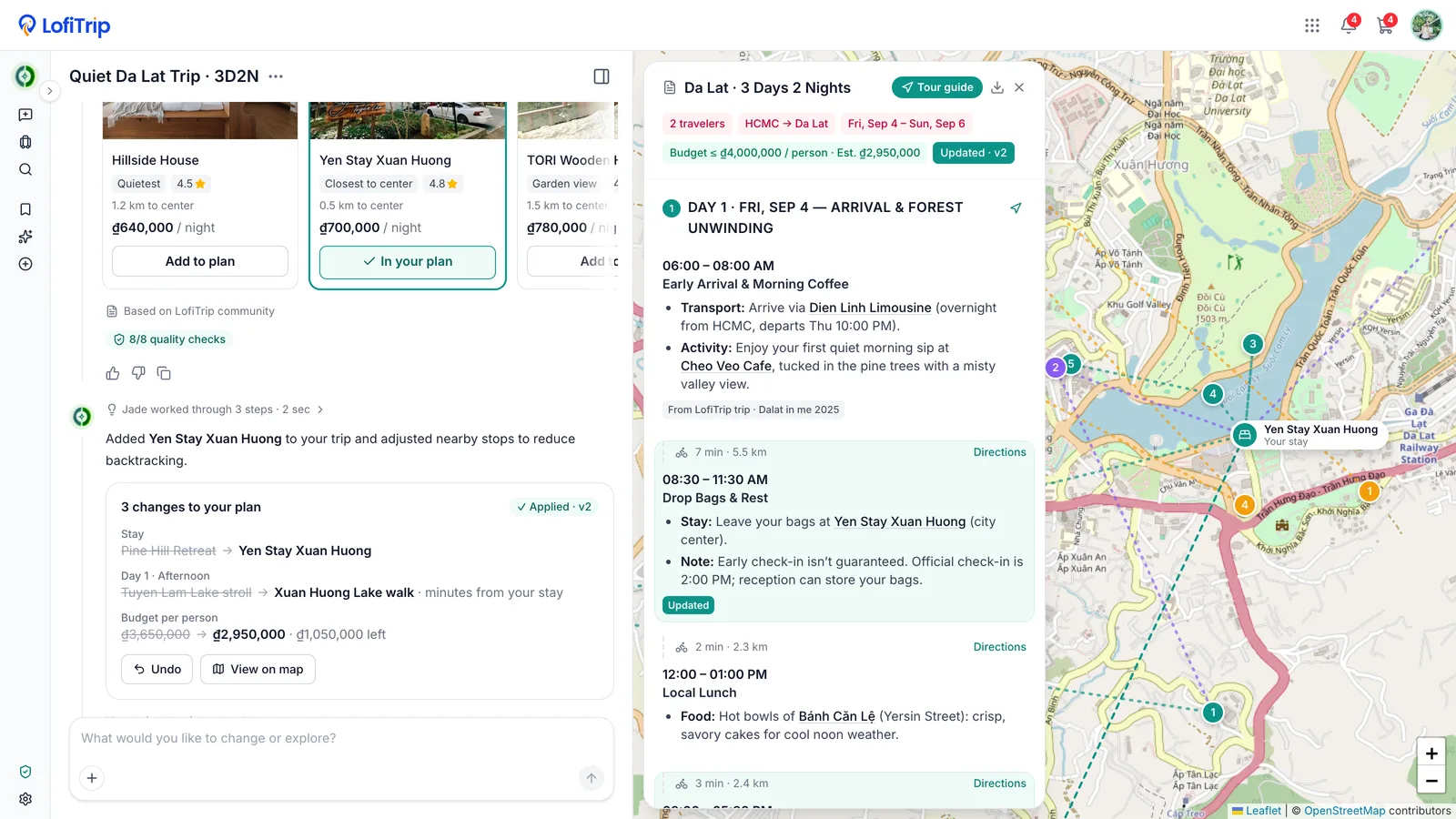
- Ask to swap the hotel and Jade first shows a change-summary: “3 changes to your plan.”
- Apply updates the stay, Day 1 and Day 3 routes, the map pins and the budget together. One decision, every surface.
- Undo and Re-apply are always there, so editing never feels like a gamble.
Preview before you commit
05 · WHAT THE CONCEPT PROVES
No users yet, so no fake metrics
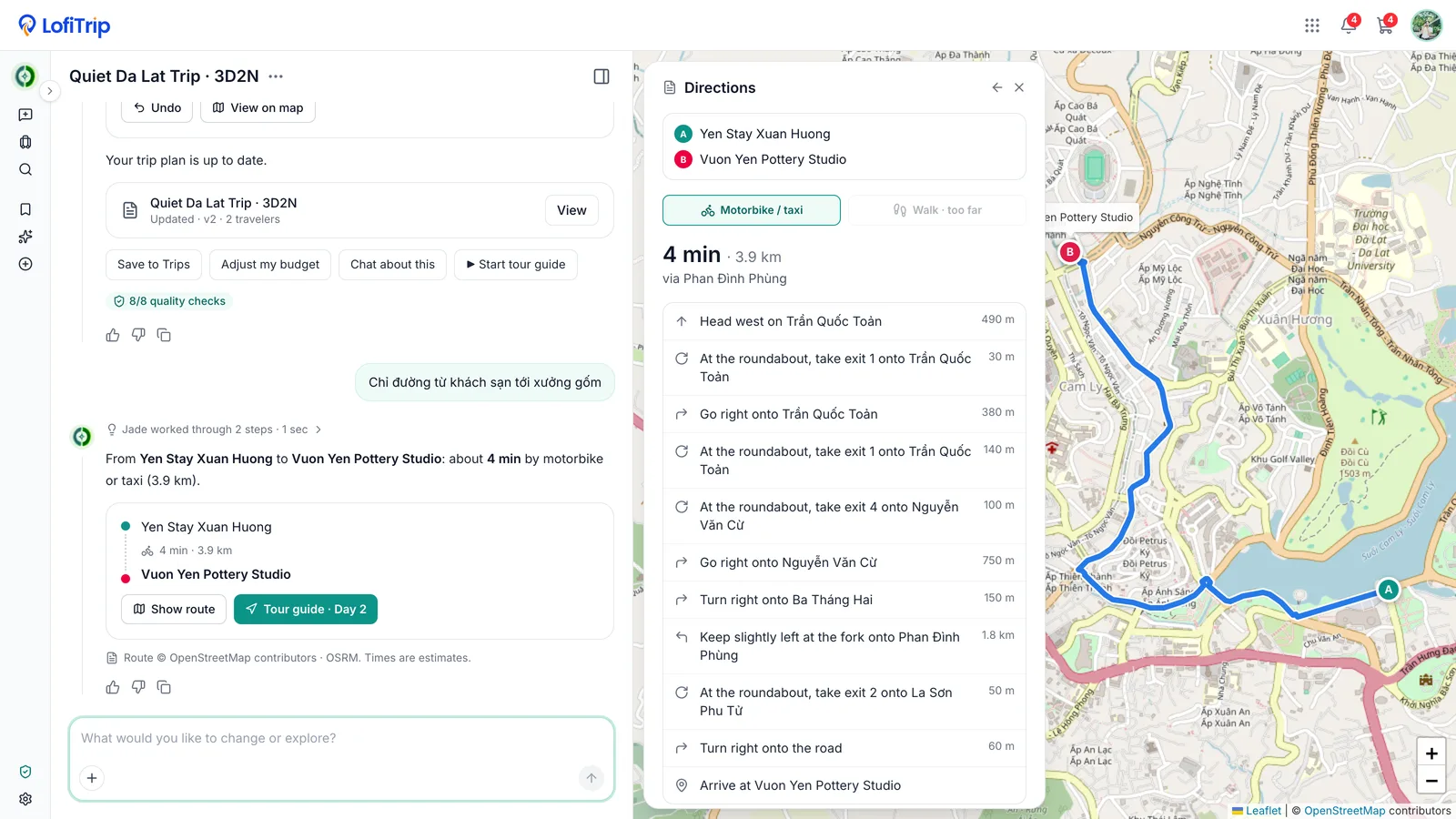
Jade has no users yet, so I won’t claim conversion lifts or “smarter AI.” What it proves is a way of designing agentic UX for travel: grounded, steerable, honest. And it’s real: a clickable prototype where trip state genuinely drives the itinerary, map and budget.
One decision, every surface
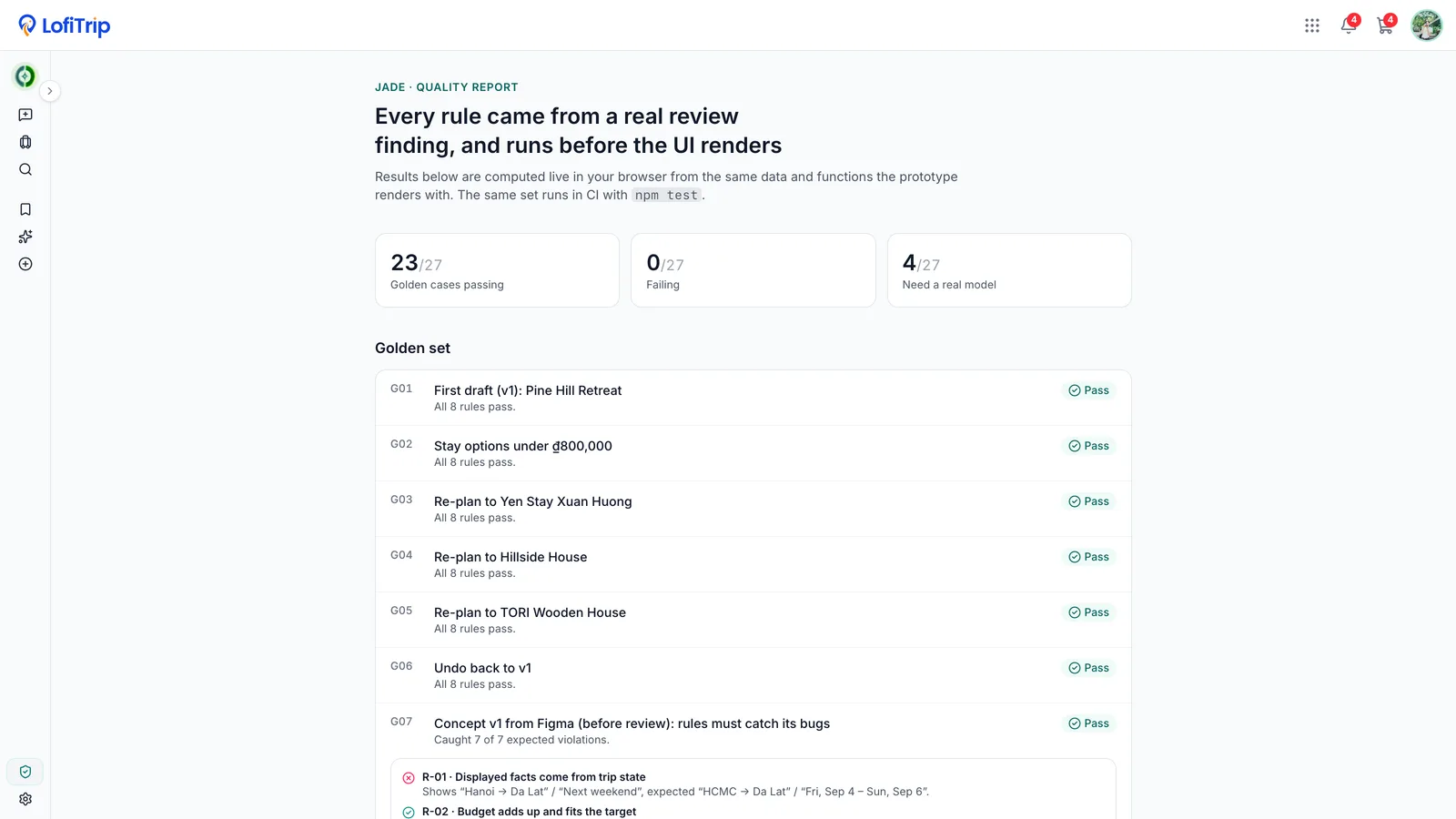
Honest by design
WHY IT LIVES INSIDE LOFITRIP
A standalone AI planner is just a chat wrapper, with no data and no memory of real trips. Jade grounds every plan in LofiTrip’s community trips, and every plan a traveler saves or takes becomes a trip shared back. Community content leads to better plans, better plans get more trips taken, and those trips come back as more content. The agent doesn’t just draw on the network, it feeds it, and that loop is both the moat and the business case.
WHAT I LEARNED
Agentic doesn’t mean autonomous. The trust didn’t come from letting the AI do more. It came from making every step legible: ask first, show sources, preview changes. The best agent isn’t the one that acts the most. It’s the one you can follow, and stop.
I BUILT A WORKING PROTOTYPE
This isn’t a static prototype. Jade is a working app where trip state actually drives the itinerary, map and budget. Then I wrote 8 quality rules from real review findings and 24 golden test cases to keep its plans honest: the guardrails a real agentic feature would need, on a concept.
The concept, in numbers
- 6
- Screens in the core flow
- 1 → 3
- One decision, three surfaces in sync
- ₫0
- Jade never books or pays, you stay in control
- 8
- Quality rules, each from a real finding
- 24
- Golden test cases (20 run automatically)
- 100%
- Drafts grounded in community trips
- −42%
- Per-person budget drop when the stay changed (demo)
- 1 tap
- Undo or re-apply any change
- Live
- Clickable React prototype, not static mockups
- Solo
- Designed and built end to end