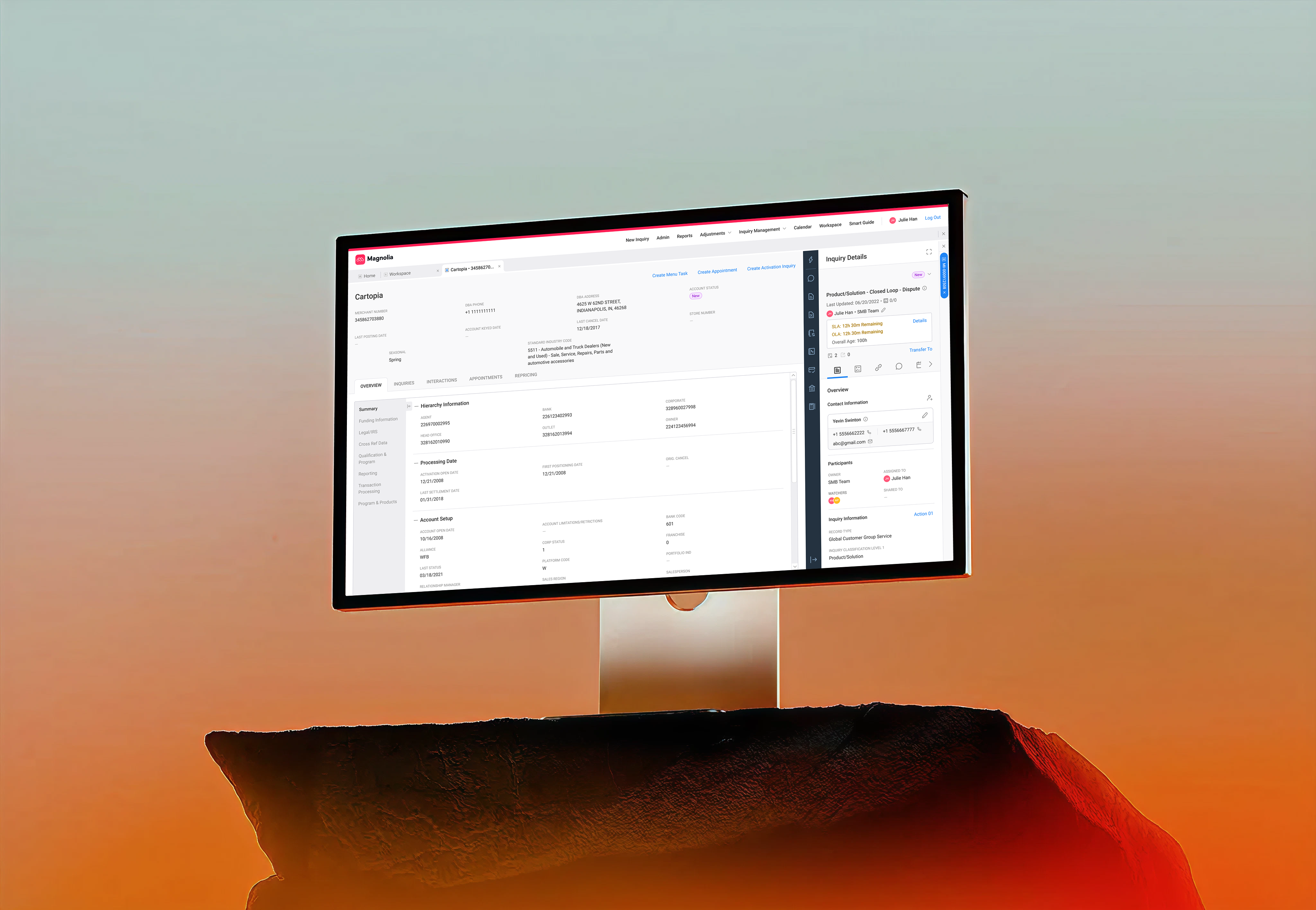
Every merchant issue begins with a customer inquiry, but resolving it requires an entirely different operational journey.
Project Brief
Merchant support teams are responsible for handling inquiries from businesses using the bank’s payment ecosystem, ranging from transaction issues and settlement disputes to device connectivity and account management.
Unlike customer-facing call center agents, merchant support agents work behind the scenes, investigating complex cases that often require coordination across multiple internal teams while meeting strict SLA commitments.
Every investigation directly impacts merchant operations, making response time, collaboration, and operational accuracy critical to both customer satisfaction and business continuity.
System Context
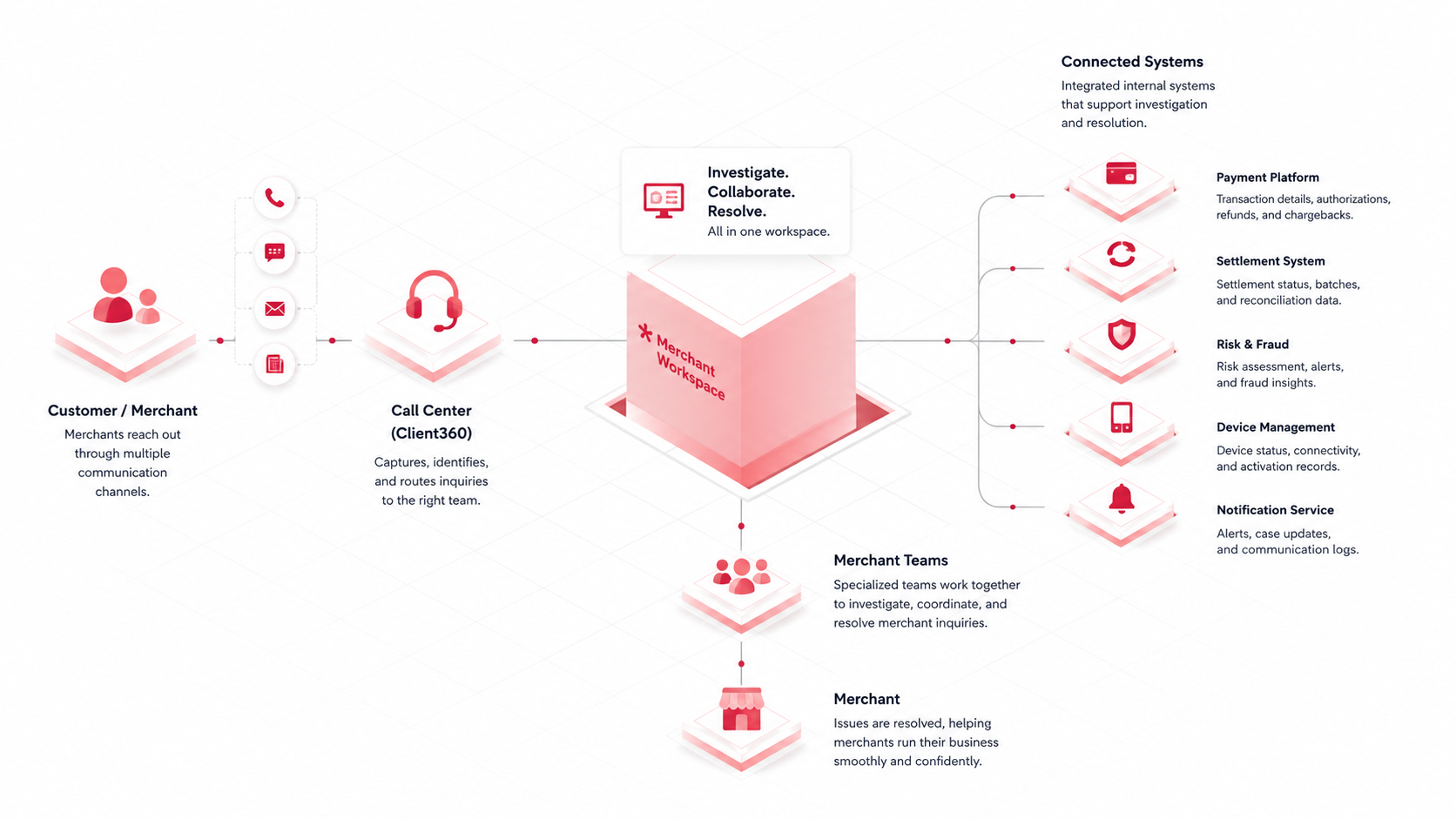
One operational workspace within the bank's end-to-end customer service ecosystem.
While the Call Center platform captures and routes inquiries, the Merchant Workspace enables specialized teams to investigate, collaborate, and resolve merchant cases.
Project Goals
Create a unified operational workspace that helps bank agents investigate, collaborate, and resolve merchant inquiries faster ...while reducing operational complexity for support teams.
The Existing Workflow
Behind every resolved inquiry was a fragmented operational workflow.
Although inquiries were successfully routed from the Call Center platform, merchant support agents still relied on multiple disconnected systems to investigate each case. Before solving the actual issue, they first had to reconstruct the operational context by searching information, coordinating across teams, and tracking service commitments manually.
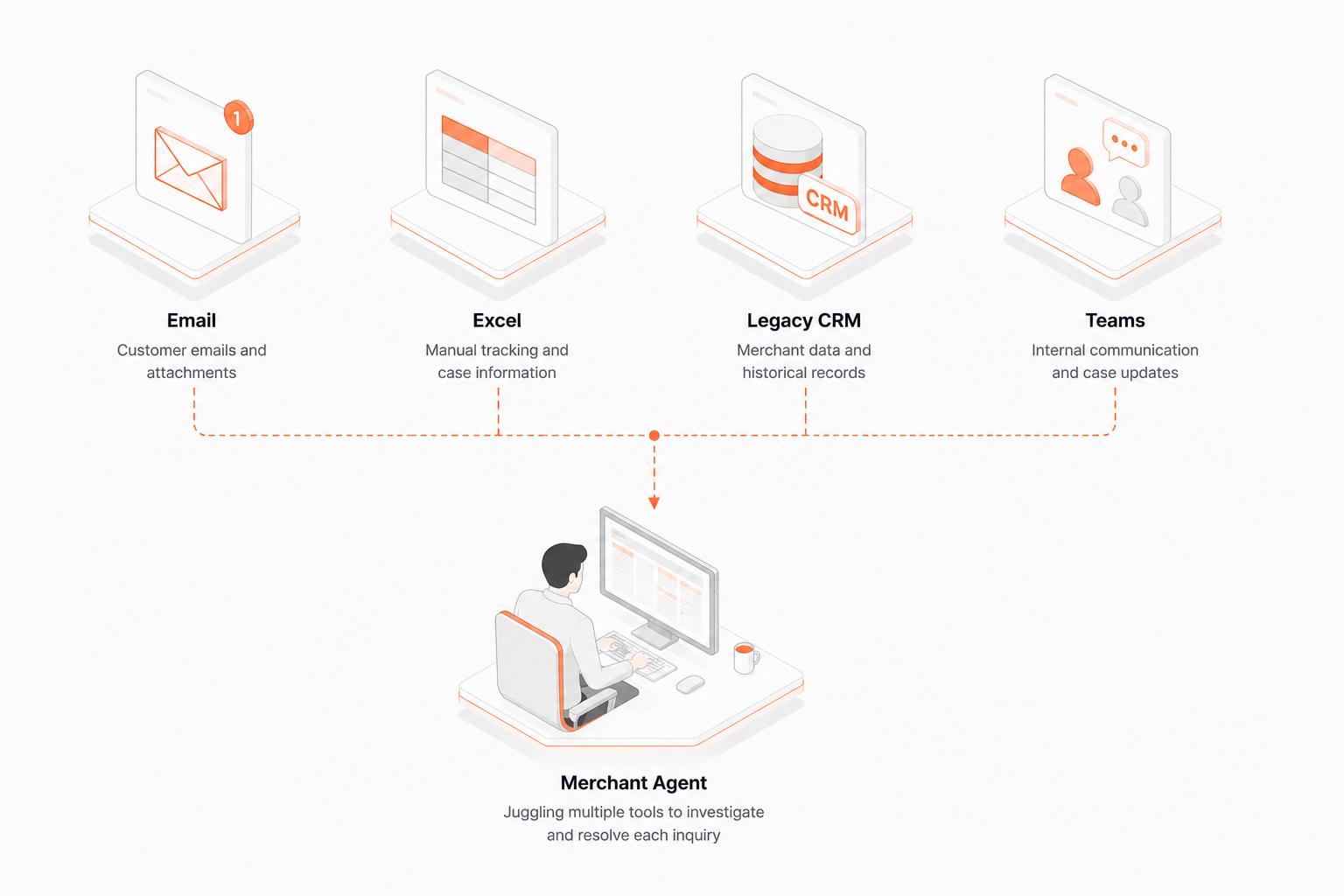
Operational Challenges

Fragmented Information
Critical merchant information lived across multiple disconnected systems.

Context Switching
Agents constantly switched between applications before gathering enough information to investigate.

Cross-team Coordination
Cases often required collaboration across multiple operational teams.

SLA Pressure
While reconstructing context, agents still needed to monitor SLA commitments and avoid service breaches.
Design Challenges
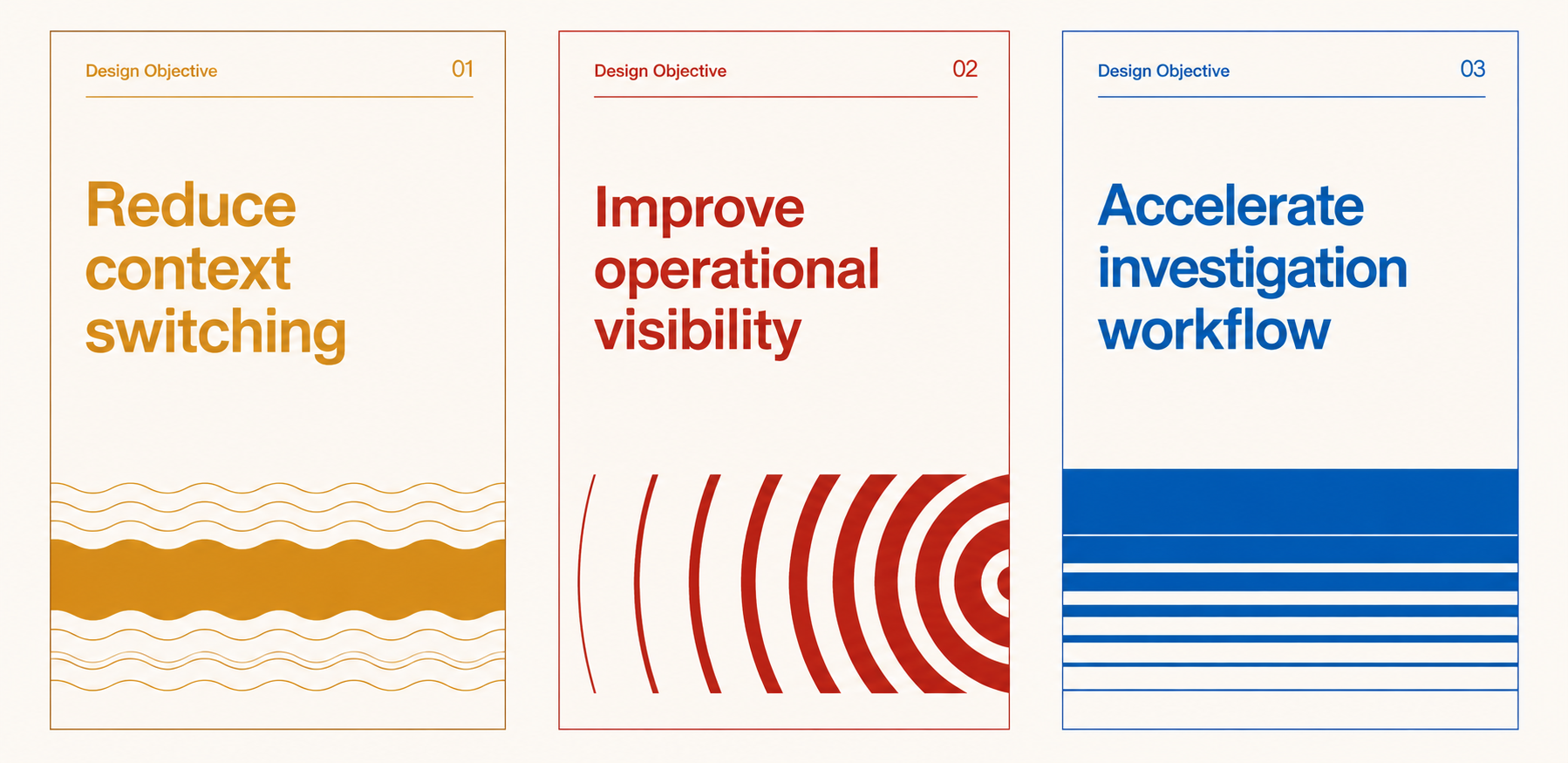
How might we create a unified operational workspace that allows merchant support agents to focus on solving problems instead of searching for information?
Learning From Merchant Operations
Before proposing any solution, we first needed to understand how merchant support agents actually worked. Together with product owners, business analysts, and SMEs, we mapped the operational workflow, reviewed existing systems, and identified where investigation time was being lost.
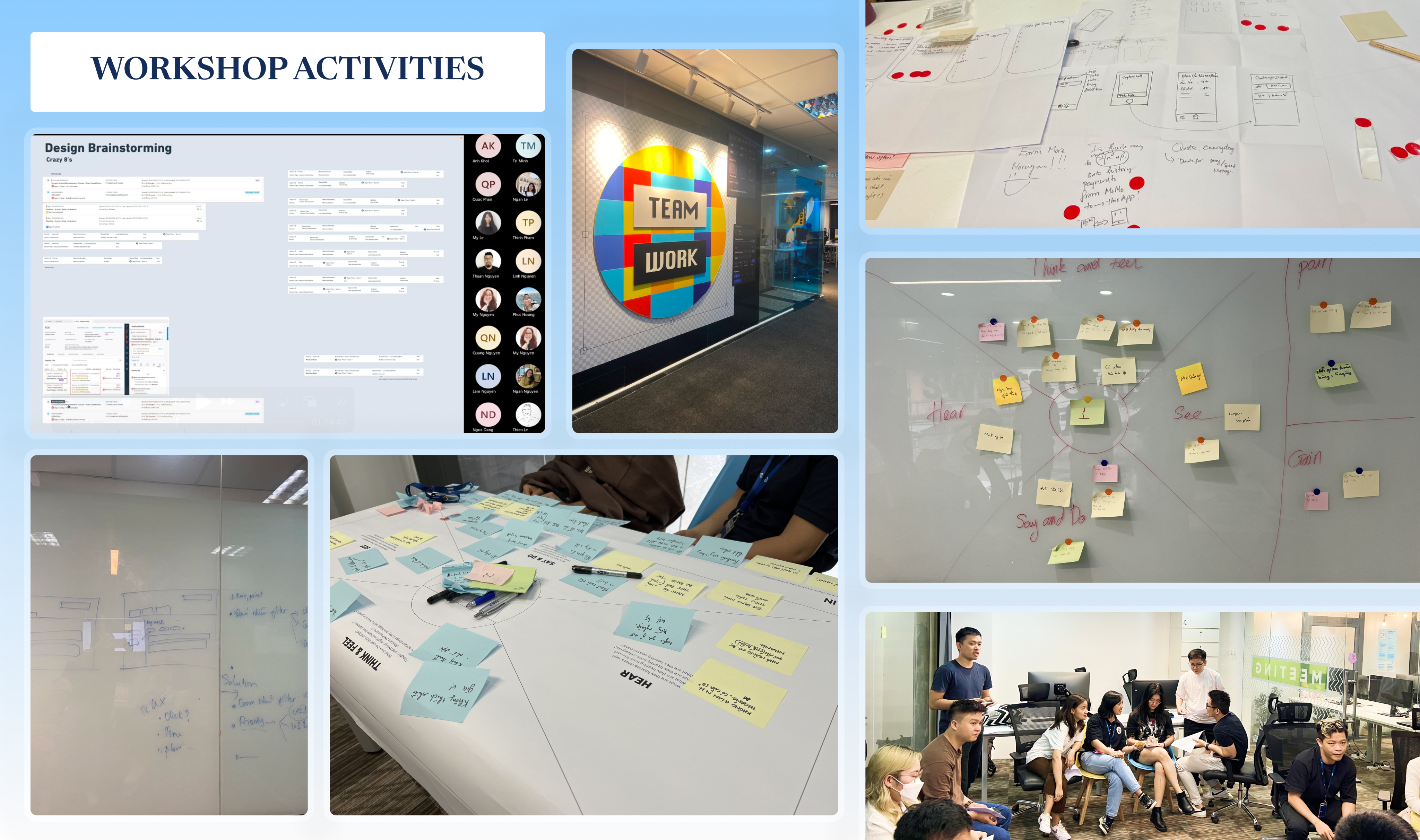
Research Activities
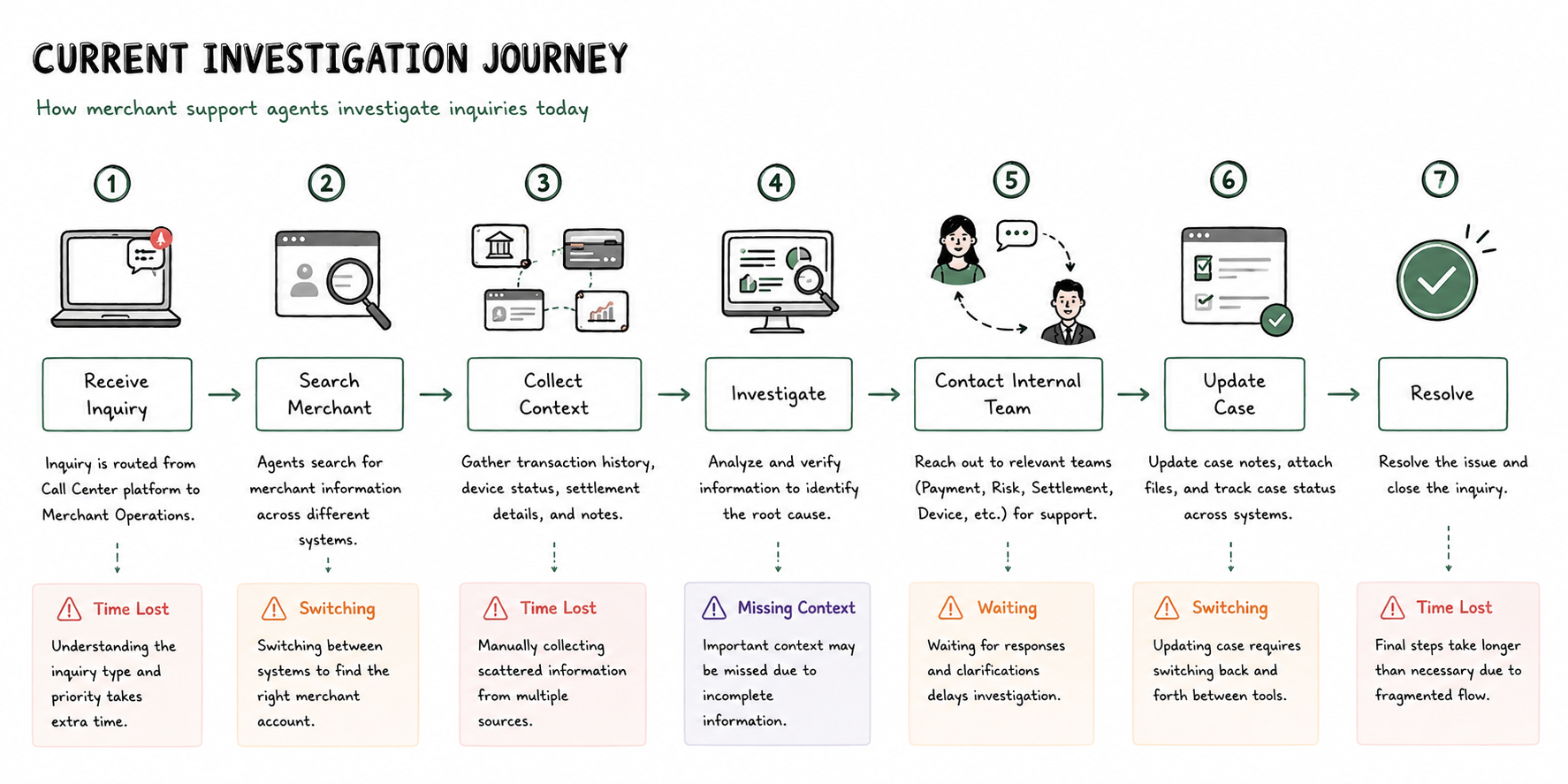
Current Investigation Journey
Although inquiries were successfully routed from the Call Center platform, merchant support agents still relied on multiple disconnected systems to investigate each case. Before solving the actual issue, they first had to reconstruct the operational context by searching information, coordinating across teams, and tracking service commitments manually.
Merchant Agent Journey.
Key Findings
Design Opportunities
Rather than optimizing individual screens, the opportunity was to redesign the investigation workflow itself by bringing operational context, collaboration, and decision-making into a single workspace.
Through workflow analysis, stakeholder discussions, and system audits, three patterns consistently emerged. These insights became the foundation for every design decision that followed.
Insight 1: Operational Fragmentation
Merchant data, transaction history, settlement details, device information, and case notes were available, but scattered across multiple internal systems. Before solving a merchant issue, agents first had to reconstruct the operational context.
👉🏼 Bring operational context into a single investigation workspace.
Insight 2: Context Switching
Every investigation required frequent switching between applications, spreadsheets, communication tools, and legacy platforms. Even experienced agents developed personal shortcuts to manage this complexity.
👉🏼 Reduce navigation and surface critical information where decisions are made.
Insight 3: Cognitive Overload
Agents weren’t just solving a merchant issue—they were juggling SLA deadlines, transaction history, team chats, and complex business rules all at once. This operational chaos drove up cognitive load and crippled decision-making speed.
👉🏼 Reduce memory burden through contextual information and structured workflows.
Reimagining the Investigation Journey
These insights became the design principles that reshaped the investigation journey. Instead of solving isolated usability issues, we redesigned the workflow around operational context, collaboration, and decision-making.
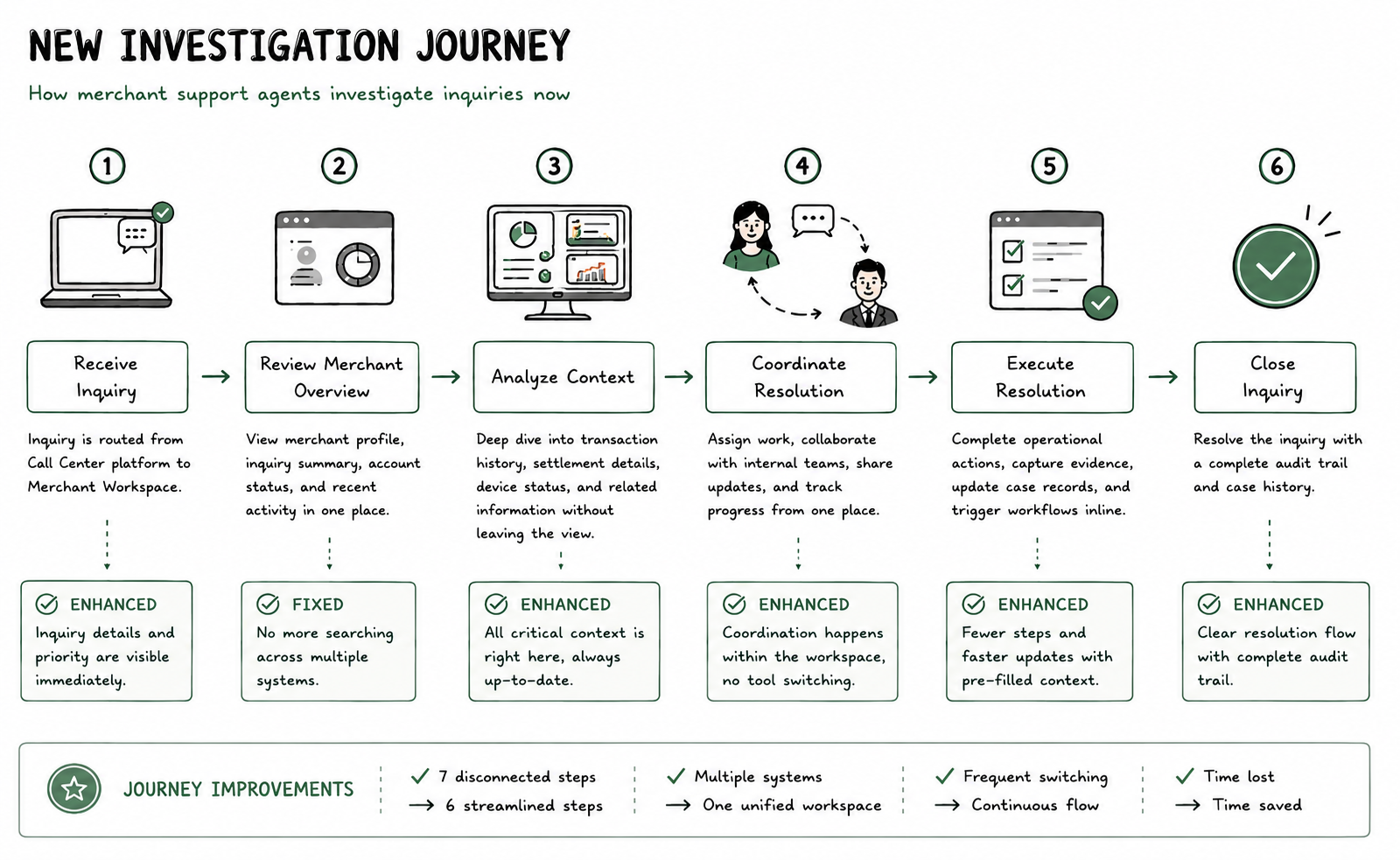
Each design decision directly addressed one or more operational challenges identified during discovery.
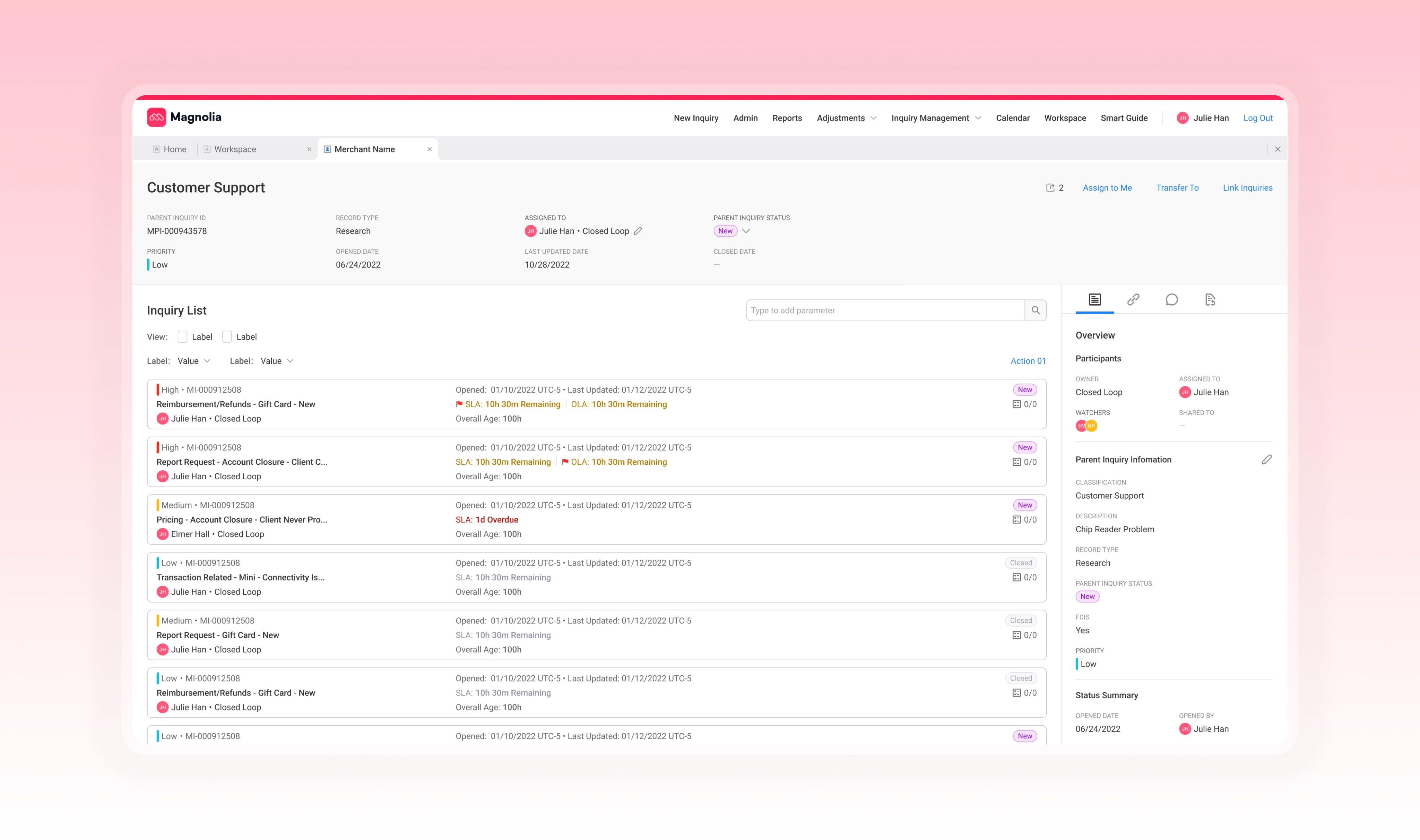
Unify the Investigation Workspace
Operational Fragmentation
Instead of spreading investigation across multiple applications, operational context was consolidated into a single workspace where agents could understand, investigate, collaborate, and resolve inquiries without leaving the current flow.
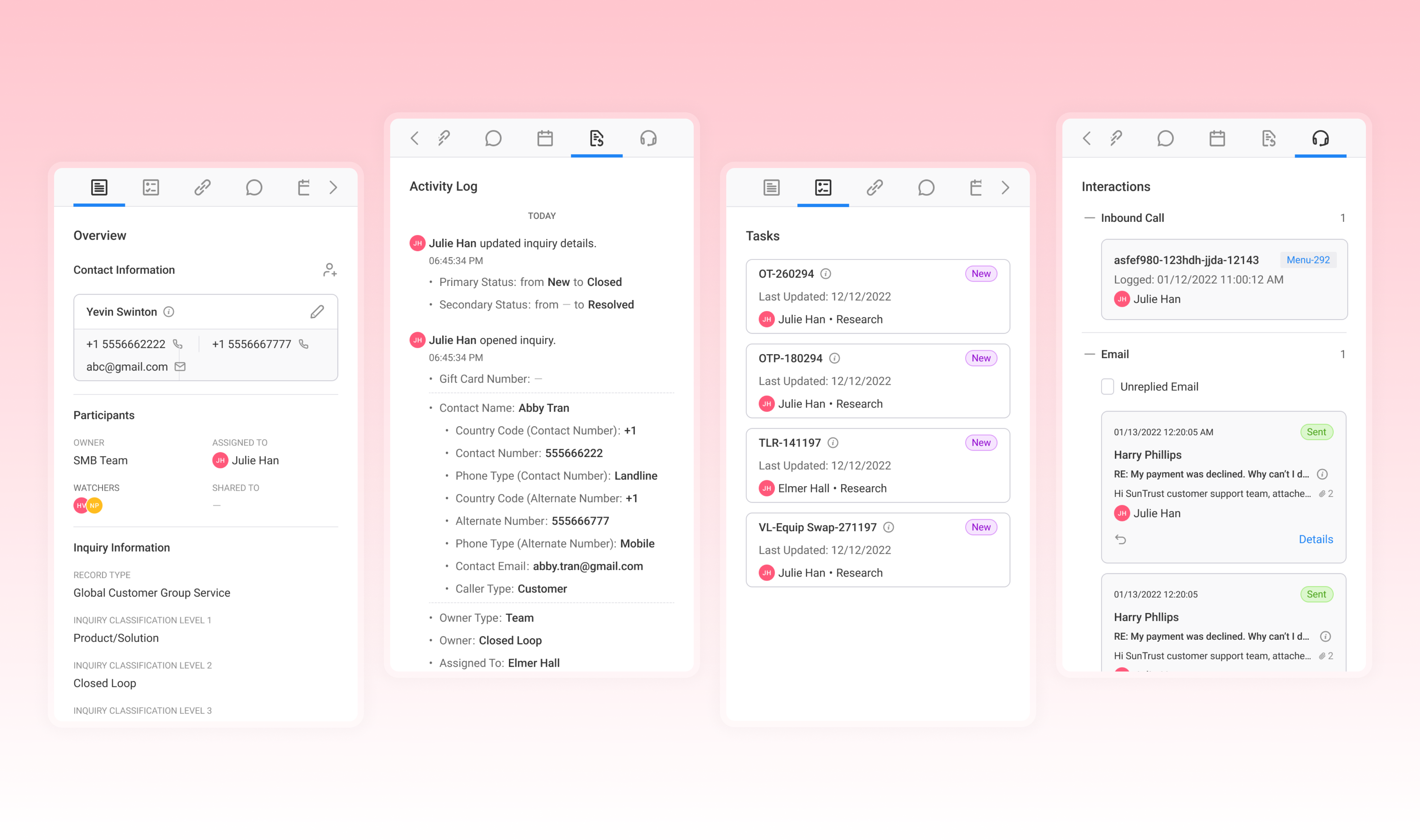
Prioritize Before Investigating
Context Switching
Agents should immediately understand which inquiry requires attention based on priority, SLA, status, and business impact before opening a case.
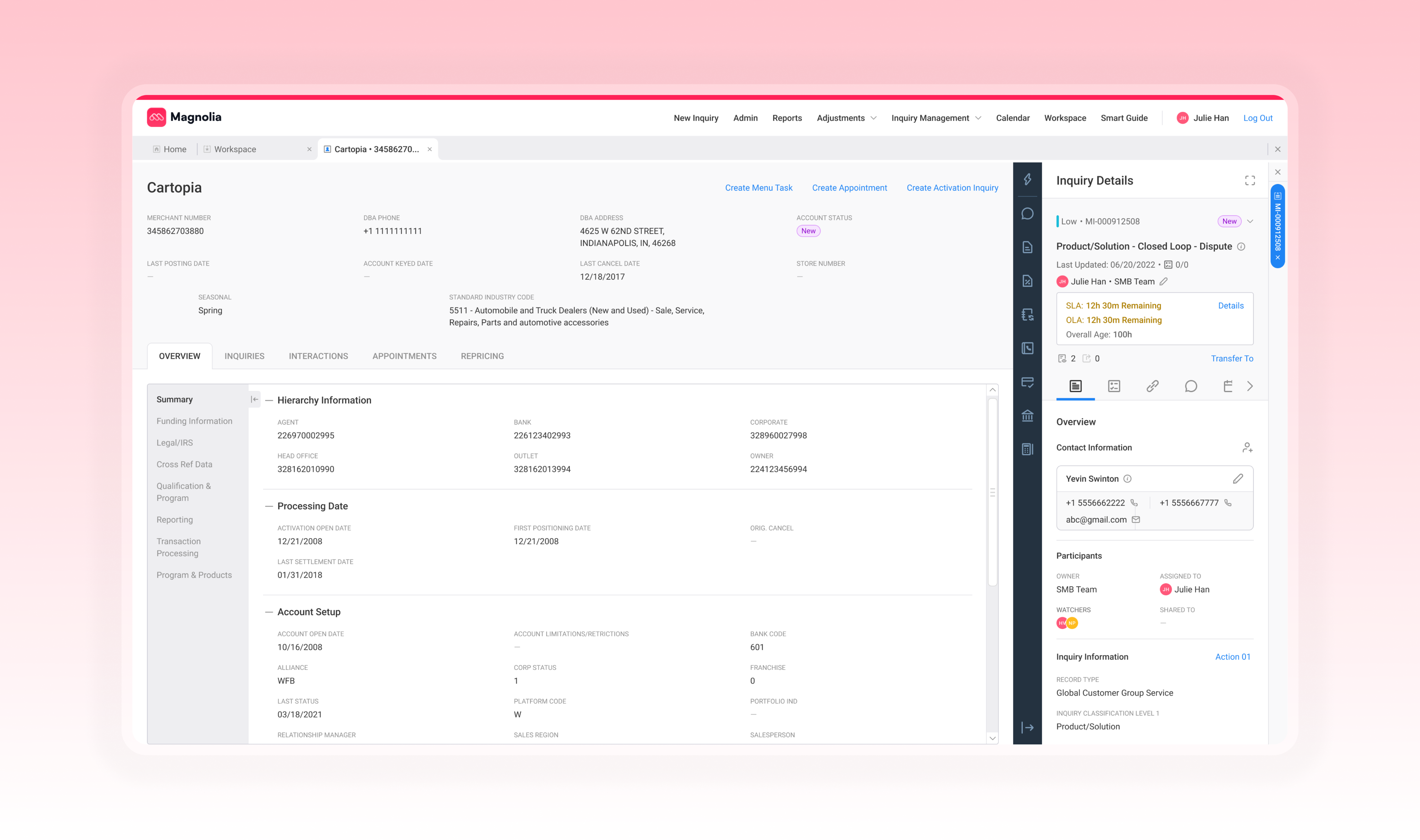
Keep Operational Context Visible
Cognitive Overload
Critical merchant information should remain accessible throughout the investigation, reducing memory load and eliminating unnecessary navigation.
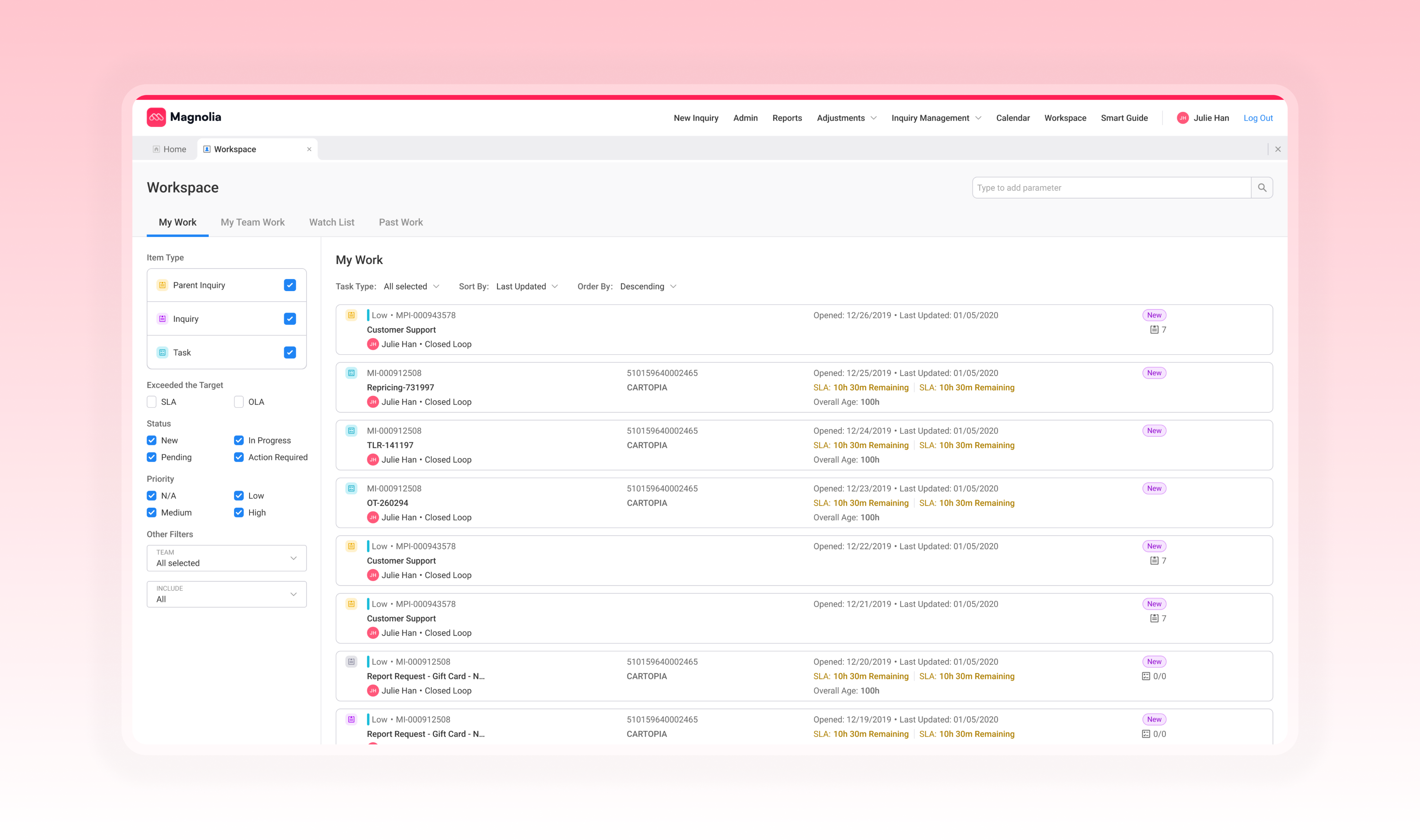
Support Continuous Workflow
Waiting & Collaboration
Frequently used operational actions were placed directly within the workspace to reduce interruptions during investigation.
Growing Within an Existing Product
Unlike starting a product from scratch, I joined a platform that had already evolved through multiple releases. My role was to continuously enhance key workflows while respecting existing business rules, technical constraints, and user habits. This experience taught me that successful enterprise design is often about improving systems incrementally rather than redesigning them entirely.
Design Beyond the Interface
Working across 6 Scrum teams, Product Owners, Business Analysts, Engineers, QA, and security reviewers changed how I approached design. Every interaction, even a small UI adjustment, required alignment across multiple stakeholders. I learned that enterprise design is as much about communication, collaboration, and trade-offs as it is about creating intuitive interfaces.
Balancing Vision With Reality
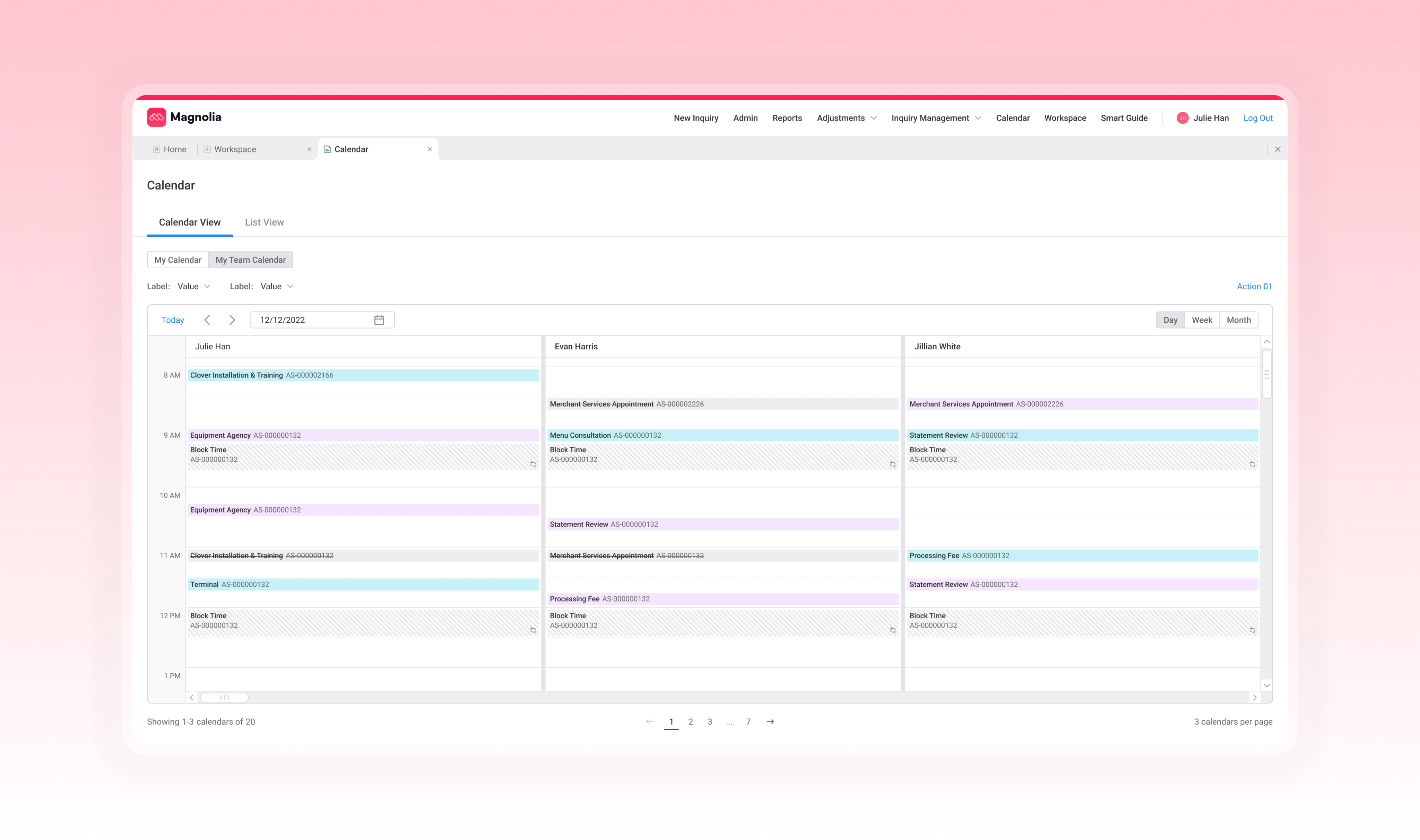
Some ideas, like expanding the operational calendar into a full team scheduling experience, showed clear value during exploration but were ultimately scaled back due to delivery priorities and project constraints. That experience reinforced an important lesson: good product design isn’t always about delivering the ideal solution, but about finding the most valuable solution that can realistically be shipped.
Looking back, Merchant Workspace wasn’t the largest product I designed, but it was the project that taught me how enterprise products are truly built.