Building a Seamless Social Travel Ecosystem

Timeline

04/2023 - 08/2025

Team

12 Designers

Responsible

Lead Product Designer

Industry

Social Network

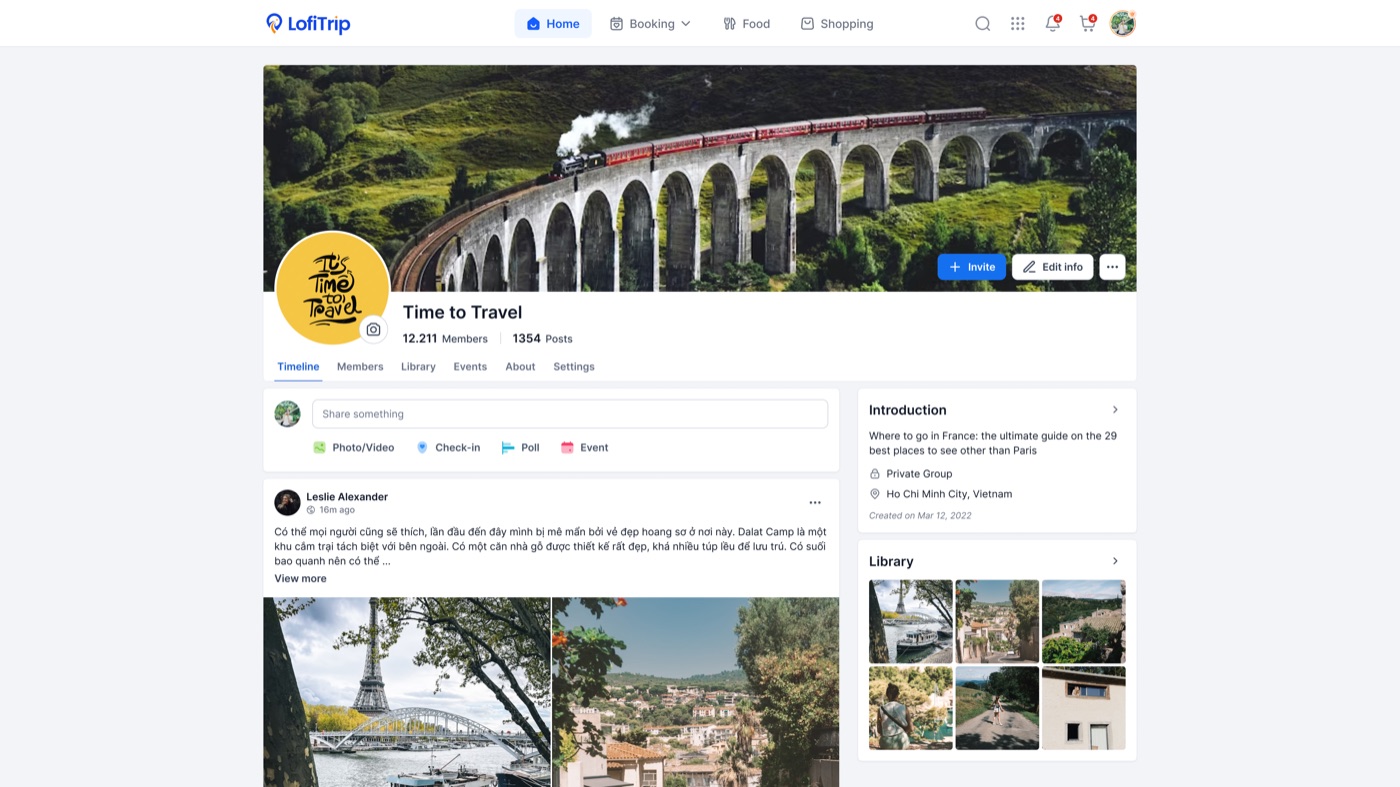
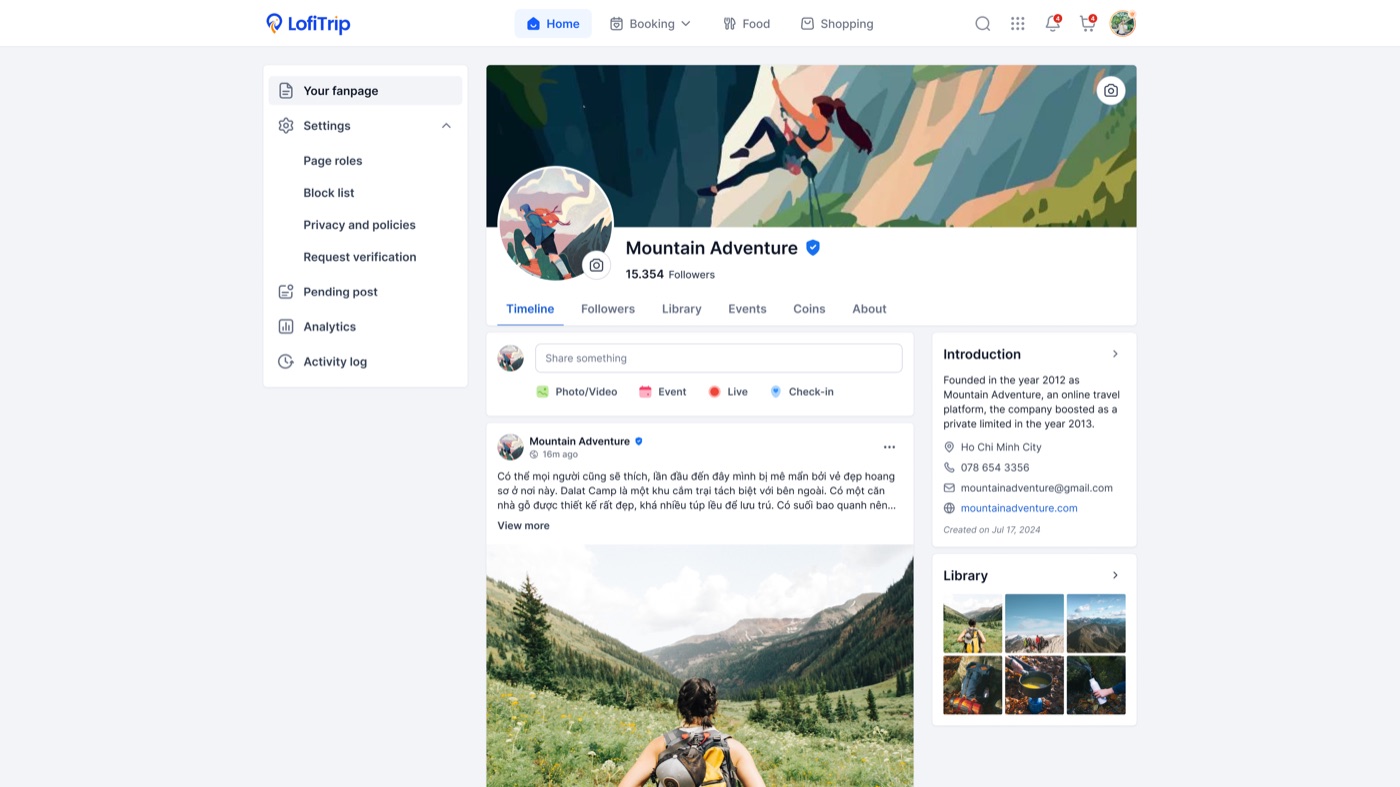
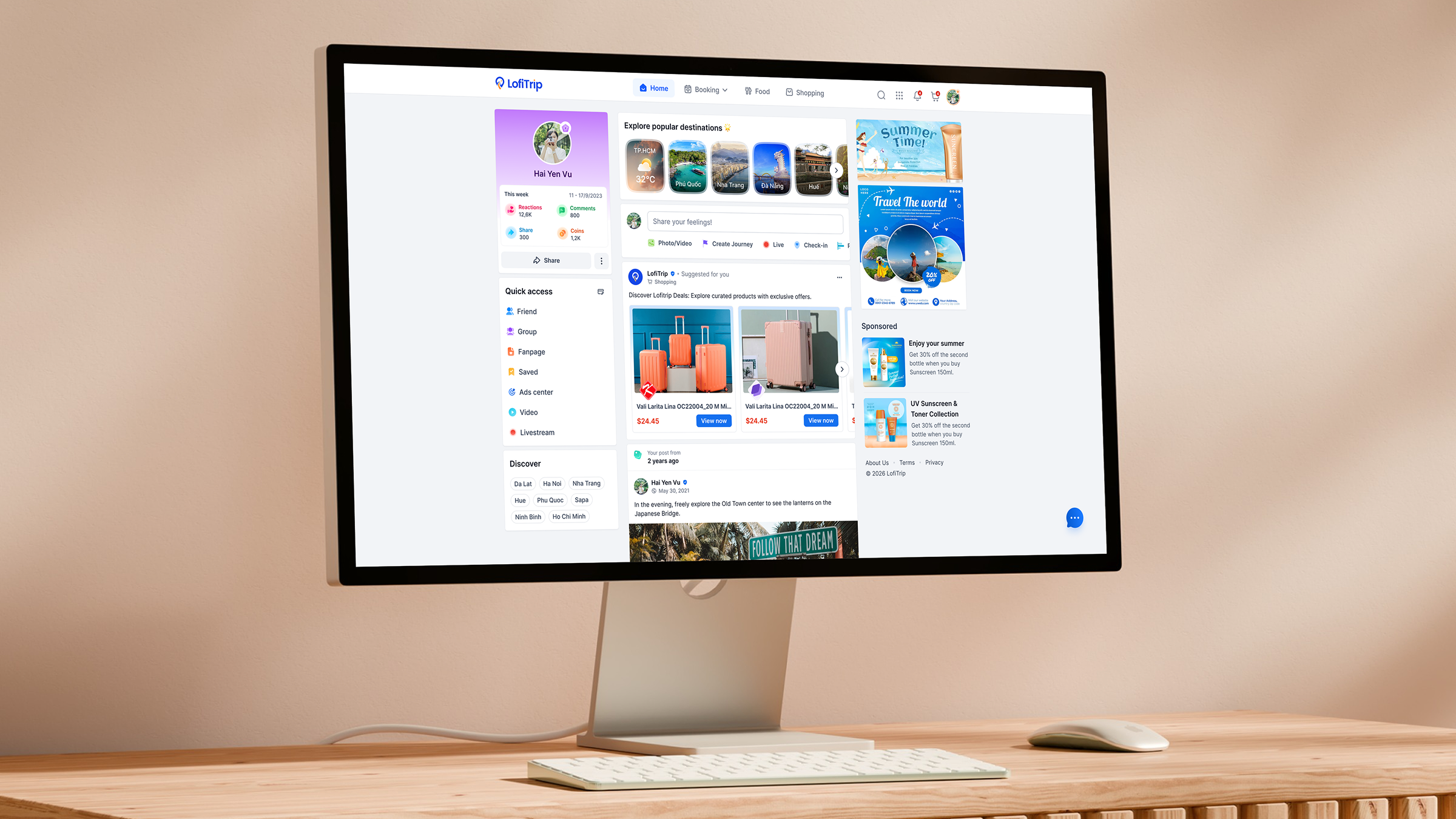
LoftTrip social travel app shown on a desktop monitor

Reimagining the travel journey through a social-centered ecosystem

Overview

In early 2023, a business client approached our team to build a travel-focused social platform that could compete with existing players in the market. The vision was to create a social-first travel ecosystem where users can discover content, plan trips, and complete bookings within a single platform. Beyond content, the product integrates multiple services including flights, hotels, tours, car rentals, and local e-commerce.

The goal is to unify the entire travel journey into one seamless experience, from inspiration to post-trip sharing. This project is not about designing features, it is about building a closed-loop growth system centered on user behavior.

Mission

Our primary objective was to establish the app as the top-of-mind destination for travelers—positioning it as the "LinkedIn of Travel." We aimed to become the market leader in Vietnam and achieve tech unicorn status. The financial strategy focused on data monetization and advertising services, with long-term plans to scale into international markets, including the US, India, and the Philippines.

Challenges

The project involved challenges across multiple dimensions, from product definition to system integration.
CATEGORY
CHALLENGE DETAILS
Scope & Timeline
Defining core concepts for six complex modules (Social, Hotels/Flights, Tours, Car Rentals, and E-commerce) within a tight timeline.
Execution
Coordinating with multiple module teams to deliver mockups in parallel, ensuring all product milestones met demo deadlines.
Design System
Establishing a consistent UI/UX and unified user flows across cross-functional teams, while rapidly building domain knowledge in booking system operations.
Infrastructure
Integrating a central admin system to manage individual modules and connecting them through shared systems like Partner Center, Finance, Marketing, and Advertising.
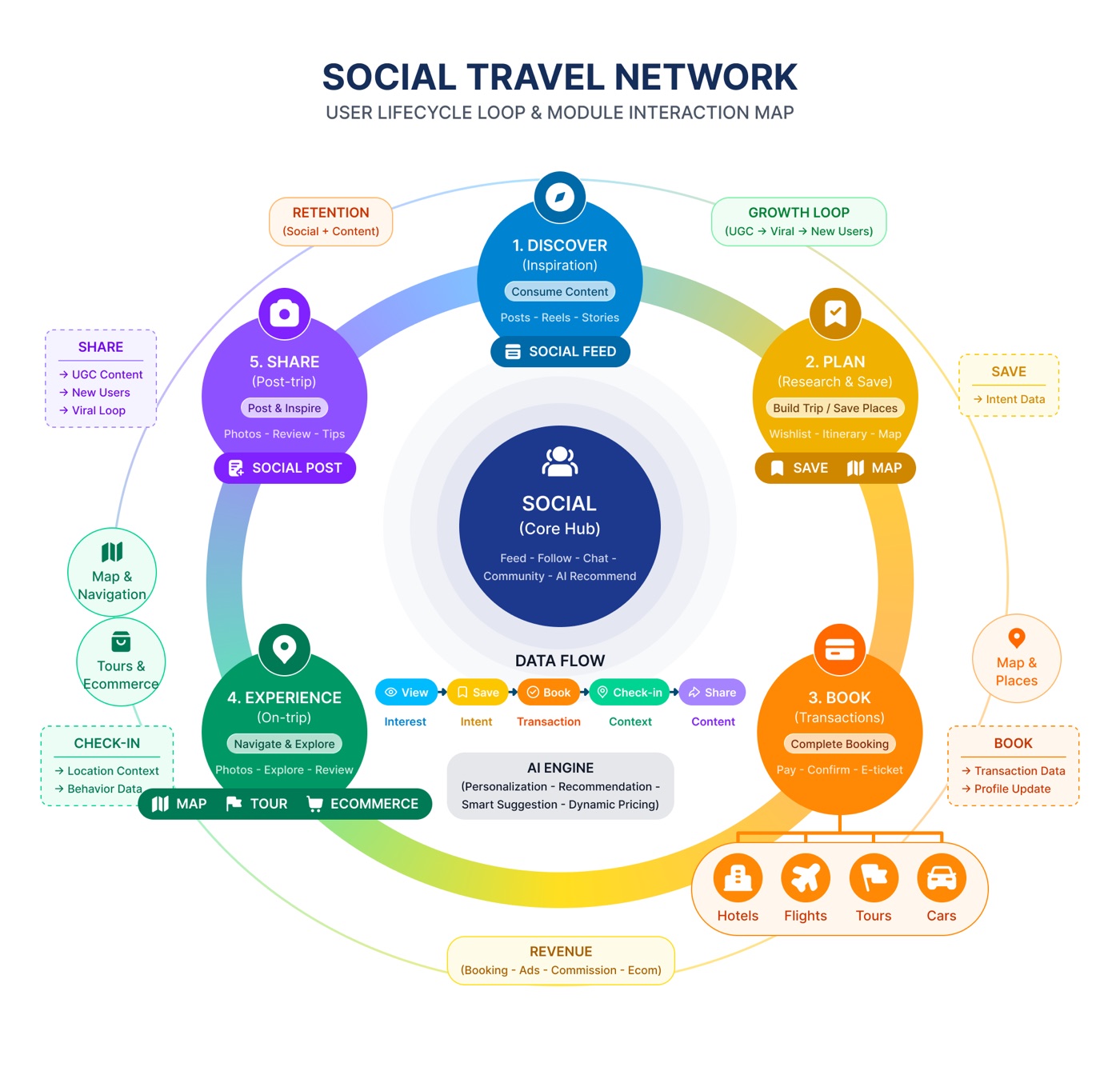
Diagram of the user lifecycle loop and module interaction map
User lifecycle loop and module interaction map

The Core Growth Loop: From Discovery to Continuous Engagement

How System Works

We designed a closed-loop ecosystem where each user action fuels the next stage of the travel journey — creating a continuous cycle of engagement, intent, and transactions.
PHASE
USER BEHAVIOR
SYSTEM LOGIC
Discovery
Users browse the social feed, discovering travel content from friends and influencers.
The system prioritizes high-engagement content to spark initial interest and inspiration.
Intent Formation
Users engage with content by saving locations, exploring tagged services, or interacting with posts.
The system translates these interactions into structured intent signals, mapping them to relevant booking modules (Hotels, Flights, Tours).
Transaction
Users complete bookings or purchases through a seamless, integrated flow.
Transaction data is captured to continuously refine user profiles and improve future recommendations.
Post-Trip Sharing
Users share real experiences back to the community, contributing new content to the ecosystem.
This content feeds directly into the Discovery layer, closing the loop and driving the next cycle of engagement.
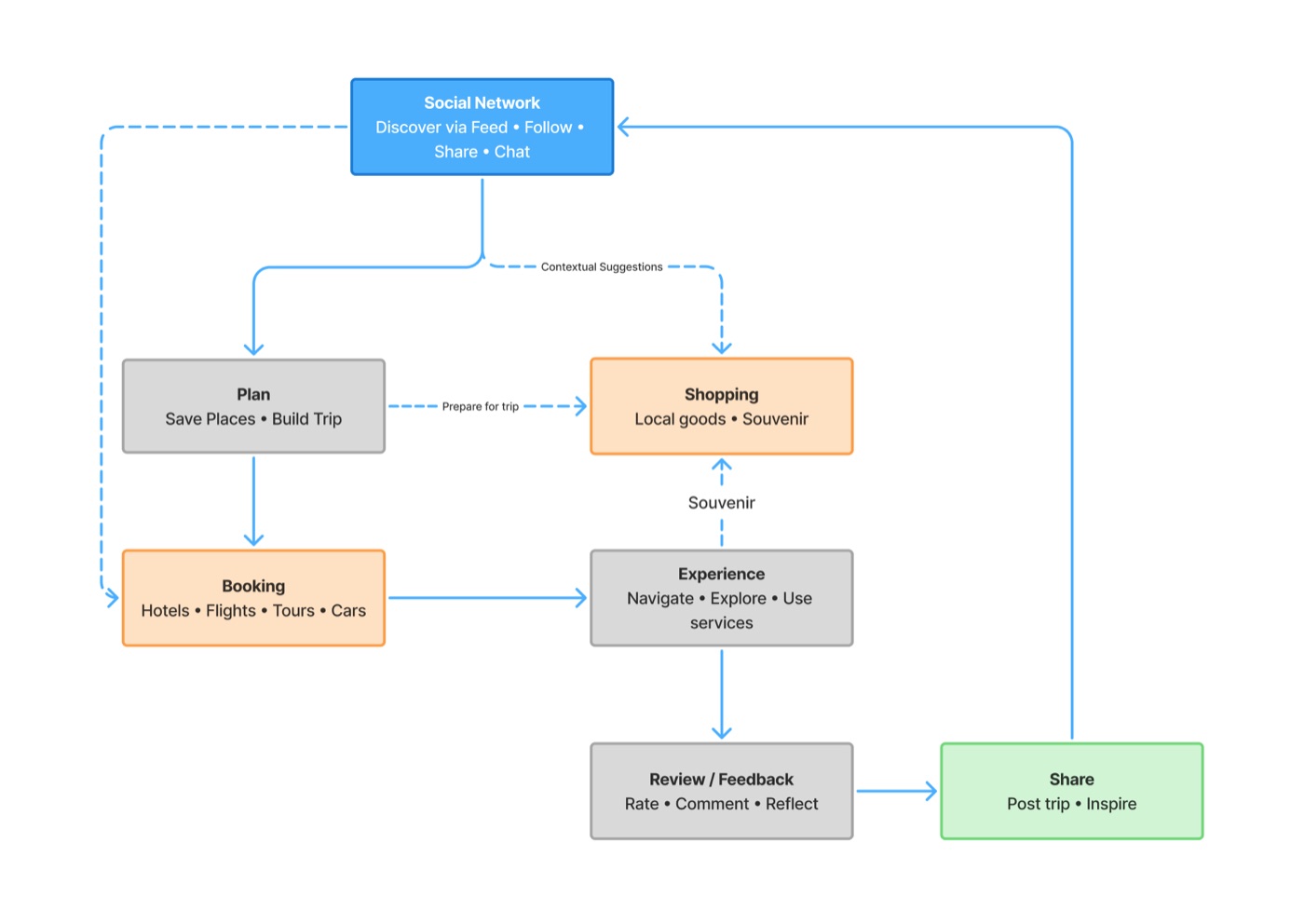
Diagram of the core growth loop
This loop keeps content, user intent, and transactions connected, creating a system that grows on its own.

A day in the app: How users earn and use value over time.

Let the story tell

To illustrate how the system operates, let’s follow Linh – a travel enthusiast using our platform:

Step 1: Social Engagement

Linh shares a high-quality photo gallery from her recent trip to Ha Giang.

  • What happens: Her post receives strong engagement (likes, saves, shares).
  • System response: The platform rewards her with SPoints for contributing valuable content.

Step 2: Intent & Transaction

While browsing Linh’s post, another user clicks on the tagged location and books a tour.

  • What happens: Linh earns bonus sPoints for driving a successful referral.
  • What she does next: Linh uses her accumulated sPoints to redeem a 10% discount voucher for a hotel in Phu Quoc and completes her booking on the app.

Step 3: Membership Progression

As Linh continues to engage and transact, the system tracks her activity over time.

  • System logic: A dedicated Membership Algorithm calculates her Tier Points based on activity frequency and transaction value.
  • Result: Linh hits the benchmark and levels up from Bronze to Silver.
  • Value unlocked: As a Silver member, she now enjoys a permanent 5% discount on all future bookings and exclusive premium vouchers.

The Cycle Continues: Higher tiers unlock better benefits, encouraging Linh to engage more, travel more, and create more content.
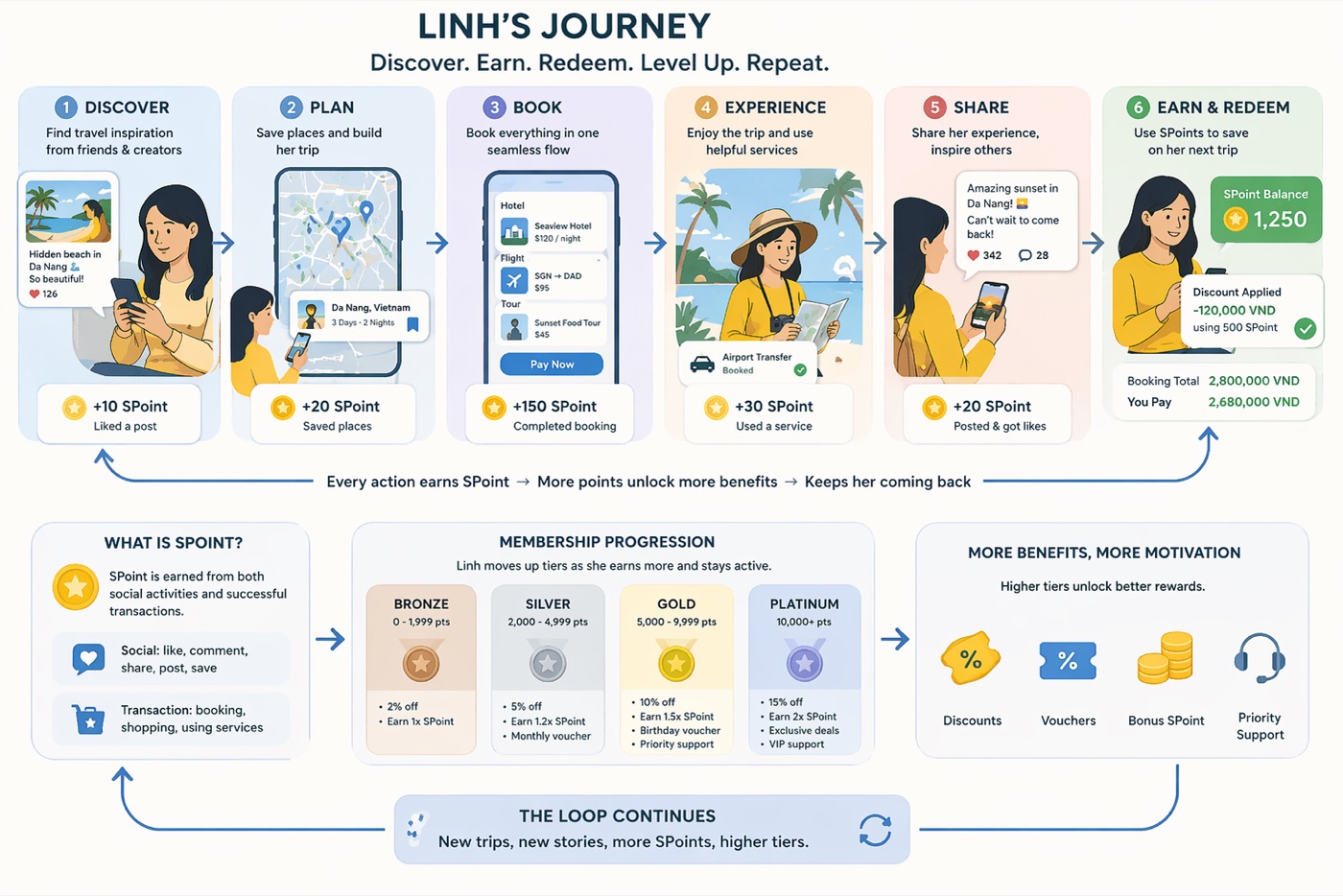
Diagram of the self-sustaining growth loop over time
Over time, the system evolves into a self-sustaining growth loop.

App Experience

Core Terminology

TERM
ROLE
SYSTEM LOGIC
SPoint
Reward Currency
Earned through social interactions and transactions. Can be used directly for discounts, vouchers, and rewards.
Tier Points
Progression Metric
A non-spendable score used to determine membership level and unlock long-term benefits.

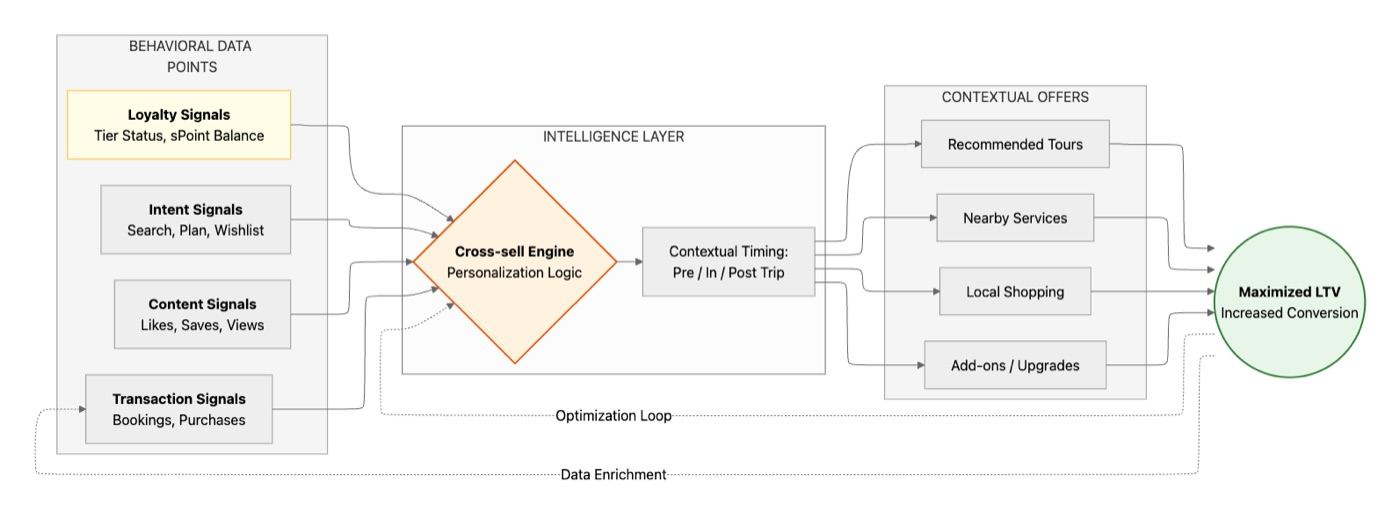
The Cross-sell Engine: Contextual personalization

While the Social and Loyalty systems drive engagement and retention, the Cross-sell Engine is the "brain" that optimizes business value. Instead of generic product suggestions, our engine focuses on Contextual Solutions—delivering the right offer at the precise moment of need.

The Strategy: Predicting the Next Step

We transform isolated modules (Flights, Hotels, Tours) into a cohesive ecosystem. By analyzing real-time intent—from social browsing to transaction history—the system predicts and fulfills the user’s next requirement.

TRIGGER POINT
DATA INPUT
CONTEXTUAL RECOMMENDATION (CROSS-SELL)
Social Content
User saves a "Hidden Gems in Bali" post.
Suggest Flight deals to Bali + Boutique Hotels in that specific area.
Flight Booking
User completes a flight booking to Da Nang.
Immediately offer Airport Transfer and Local Tours/Activities for those dates.
In-Trip Check-in
User’s GPS or Check-in status at a resort.
Push notifications for In-resort Dining or Nearby Attractions.
Post-Trip
User shares photos of a beach trip.
Suggest future destinations, travel deals, or relevant products based on past trips.

How It Works: The Intelligence Layer

  • Multi-Dimensional Behavioral Tracking: The system monitors not just what users buy, but what they view, save, and interact with on their Social Feed.
  • Contextual Logic & Timing: Offers are filtered by the user’s current "Trip Stage" (Pre-trip, In-trip, or Post-trip). We don’t sell an "Airport Pickup" when the user has already arrived.
  • Loyalty-Driven Personalization: By integrating Tier Status and sPoint Balance, the engine creates "Tier-exclusive" deals and dynamic bundles, making high-tier members feel truly privileged.

Key Performance Impact

  • Maximize LTV (Lifetime Value): Keeps the user spending within the ecosystem throughout their entire travel lifecycle.
  • Increase AOV (Average Order Value): Encourages users to add high-margin services (Tours, Insurance) to their primary bookings.
  • Self-Learning Feedback Loop: Every conversion enriches the user profile, making the next recommendation even more accurate.
Diagram of the cross-sell engine
Together with the core loop and loyalty system, the cross-sell engine completes a fully integrated growth ecosystem.

Afterword: The art of systemic trade-offs

Designing this travel ecosystem taught me that a product’s beauty isn’t just in its UI, but in the harmony of its constraints. We all use social media and booking apps daily—they feel effortless, almost invisible.

The “Living” Material

Beyond tools, building this system required understanding real user behavior.

Why people save a place at midnight.

Why they hesitate before booking.

Why they share after a meaningful trip.

Design decisions only make sense when grounded in these moments.

Final Reflection

In the end, my role was to be the bridge between Business Logic and User Desire. This Case Study is a testament to that journey—an exploration of how we can turn "content" into "intent" not through manipulation, but through an authentic understanding of how people move, dream, and travel.

A great product isn’t one that has every feature, it’s one where every module connects with a purpose, solving a real-world problem while keeping the human experience at its heart.
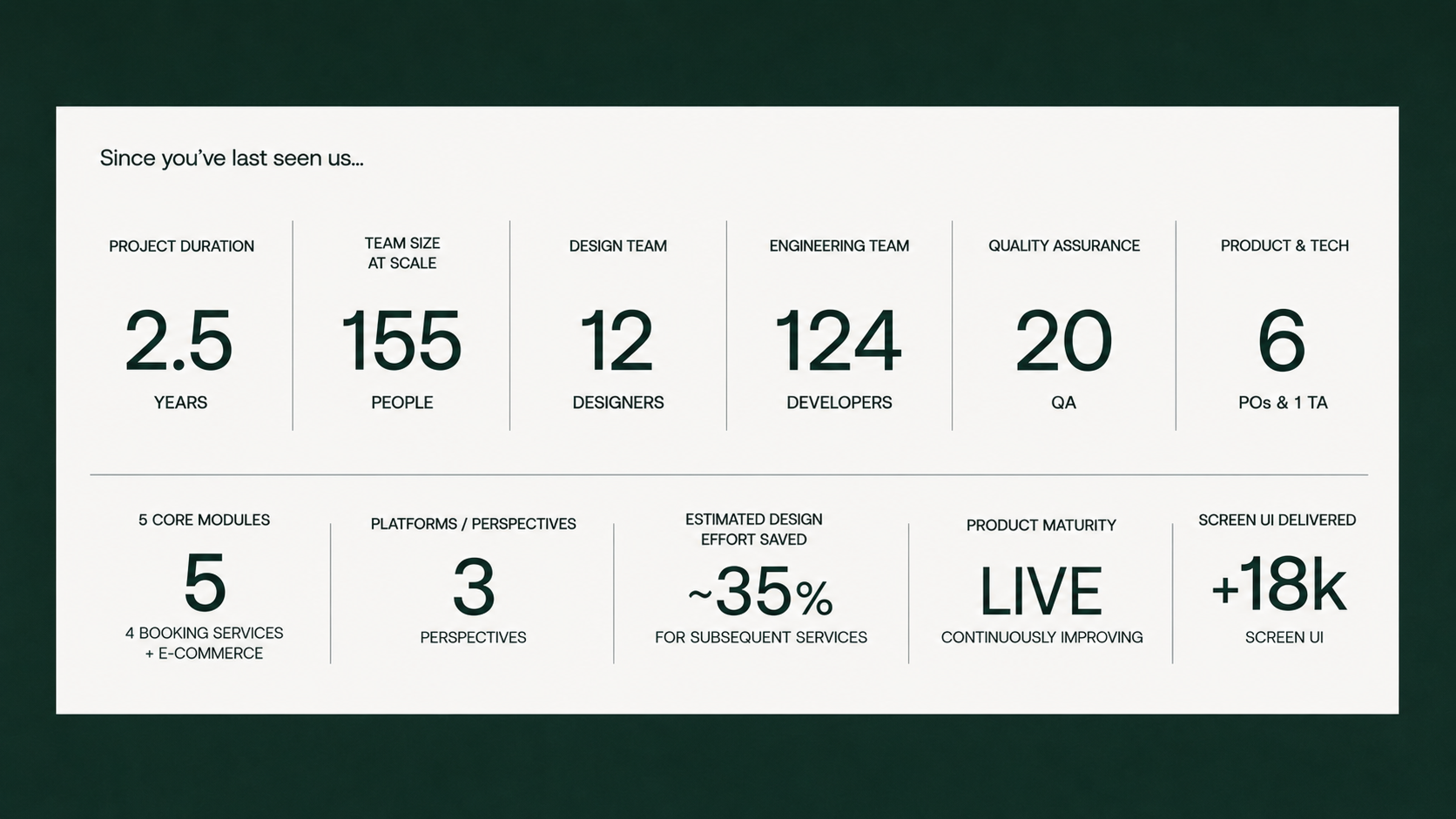
Project stats since launch: 2.5 years, 155 people at scale, 6 designers, 124 developers, 20 QA, 6 product & tech, 5 core modules, 3 platforms, ~35% design effort saved, live product maturity, over 18k screen UI delivered
The numbers

continuereading